

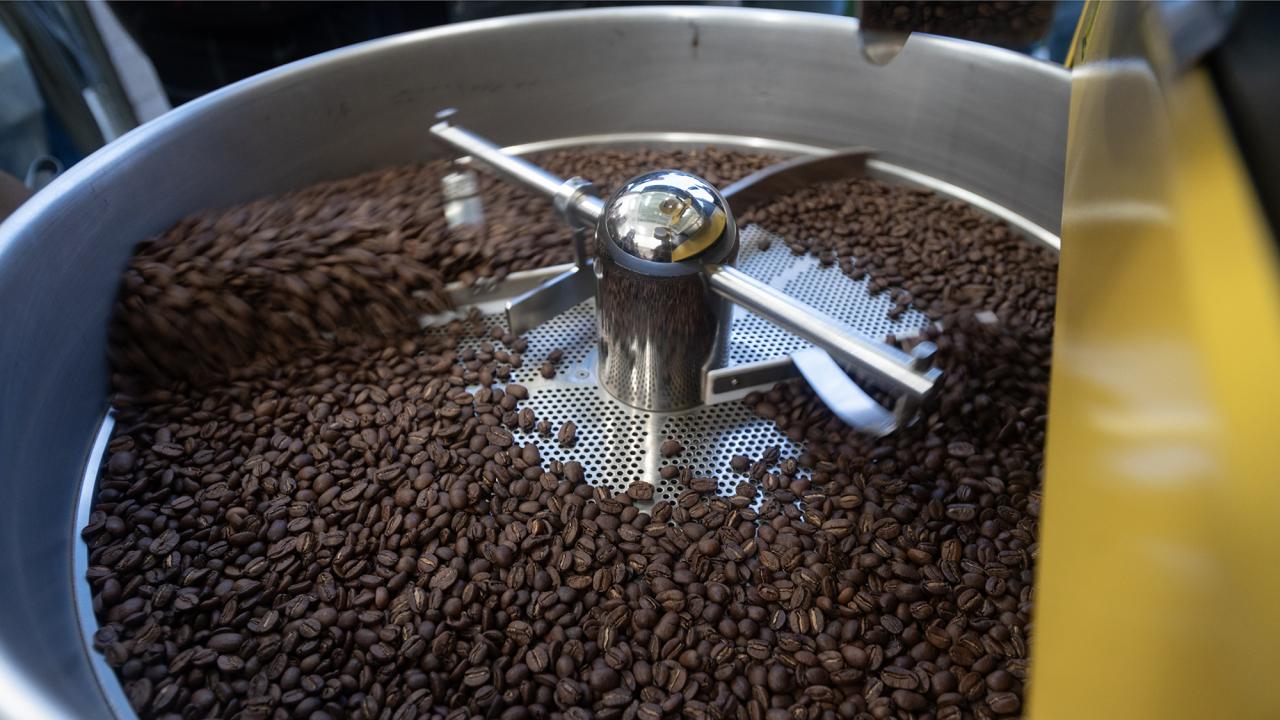
The University of California, Davis, has received three significant collections of coffee-related materials that together illuminate the history, science and global impact of specialty coffee.
The donations to the UC Davis Library are from Gerald “Jerry” Baldwin, co-founder of Starbucks and former president of Peet’s Coffee; Russ Kramer, president of Hacienda La Minita and veteran of Green Mountain Coffee; and the Specialty Coffee Association (SCA).
The materials — including rare books, photographs, business records and other archival materials — provide a comprehensive record of coffee’s evolution from agricultural commodity to global consumer product.
The UC Davis Coffee Center is the first academic research and teaching facility in the United States dedicated entirely to the study of coffee.
“These three collections complement and support the research leadership of the UC Davis Coffee Center, while expanding the library’s world-class collections on food and drink,” said Audrey Russek, who leads the library’s strategic initiatives around distinctive collections in food, wine and other beverages.
Baldwin, Kramer and Peter Giuliano, SCA’s chief research officer, participated in a discussion about the transformation of coffee culture at a campus event Wednesday night.
Specialty coffee movement
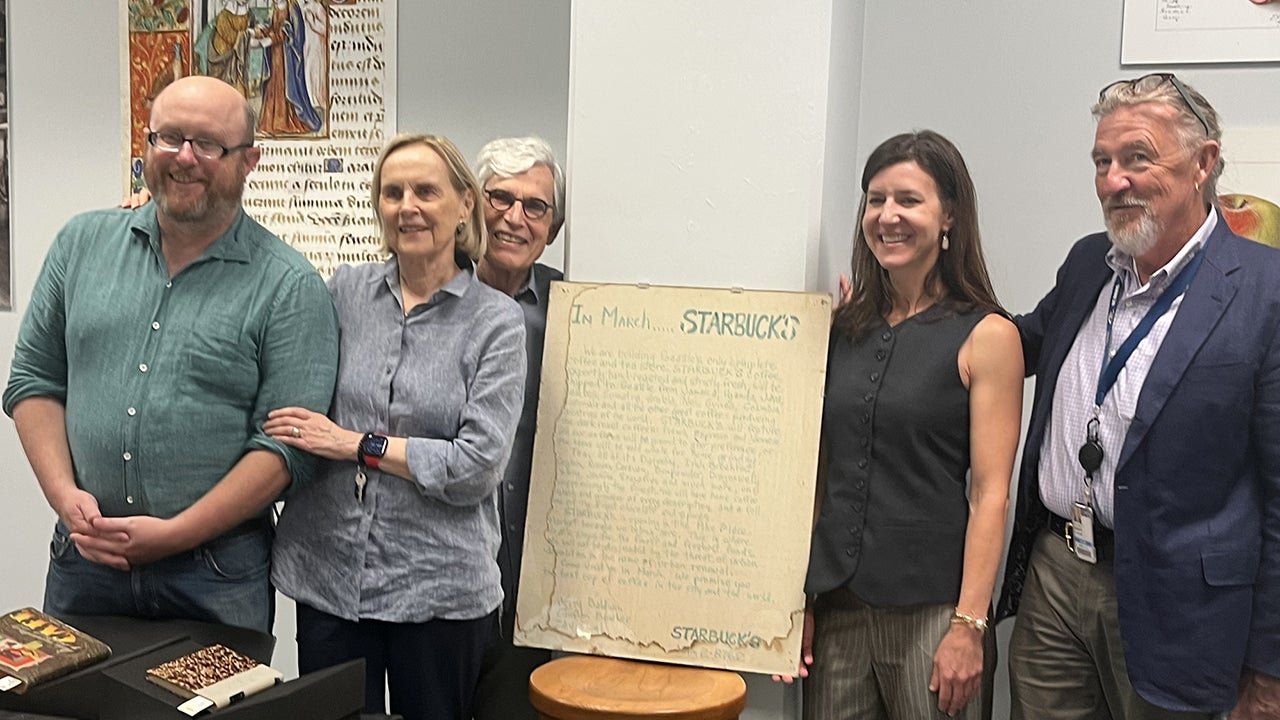
Baldwin’s donation includes archival materials that chronicle the early years of Starbucks after its 1971 founding and the emergence of specialty coffee in the United States. Items include:
- A handwritten manifesto displayed outside the original Starbucks location
- The company’s first guest book, signed by many of the founders’ family and friends
- Early scrapbooks and photographs
- Financial records from the company’s formative years
- Original tasting score sheets
These primary source materials document how early entrepreneurs approached sourcing, roasting and customer experience at a time when specialty coffee was still an emerging concept.
“The amount of apocrypha that flies around the internet is huge,” Baldwin said. “My hope is people who are interested can turn to these documents as a reference and understand what it was truly like at the beginning.”
Agriculture and global trade
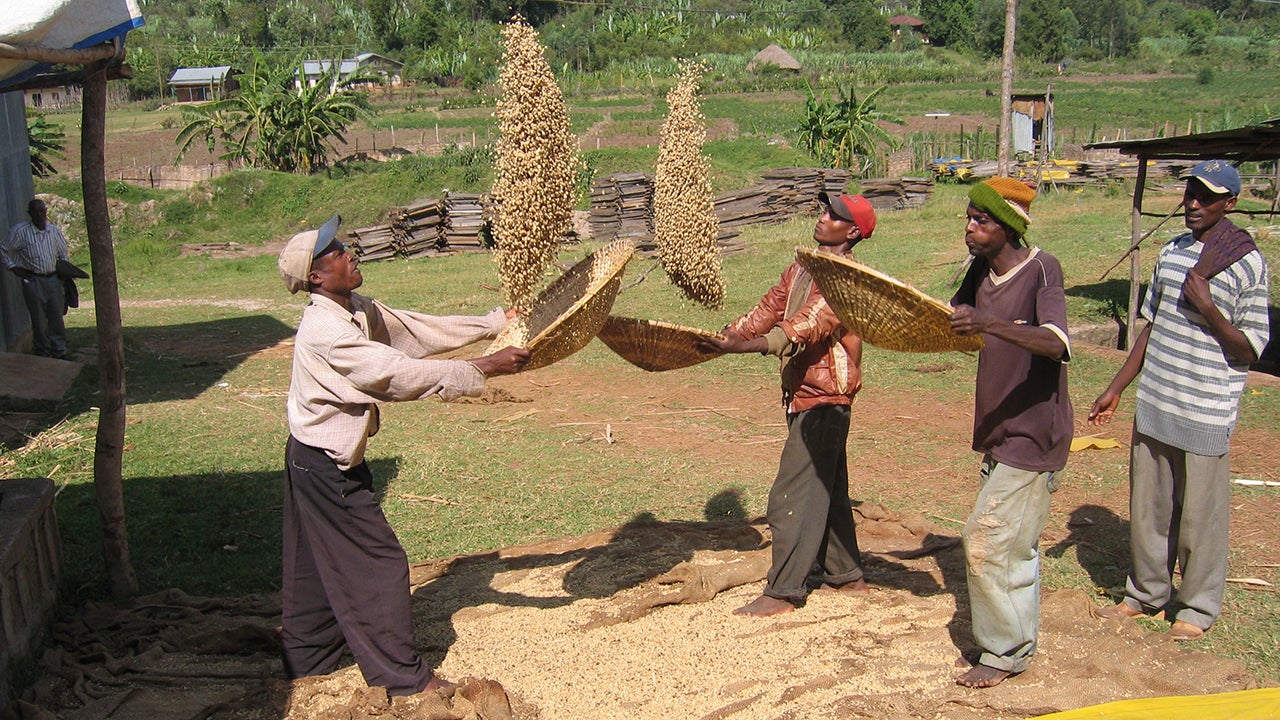
Kramer’s contribution reflects decades of work in coffee production, sourcing and industry leadership. A longtime advocate for quality and traceability, Kramer assembled an extensive collection of books, correspondence and records related to coffee’s agricultural, economic and cultural dimensions.
It includes documents related to coffee markets, international trade and product development, as well as rare books acquired and donated in partnership with Distant Lands Coffee, Hacienda La Minita’s parent company. One of those historical texts, Le bon usage du thé, du caffé, et du chocolat pour la preservation & pour la guerison des maladies (1687) by French physician Nicolas de Blégny, is now the fourth-oldest book about coffee in the library’s collections.
Professional standards
The Specialty Coffee Association donation includes over 100 boxes of organizational records, early publications and industry documents. They trace the development of professional standards, shared terminology and research priorities that helped shape the modern specialty coffee industry.
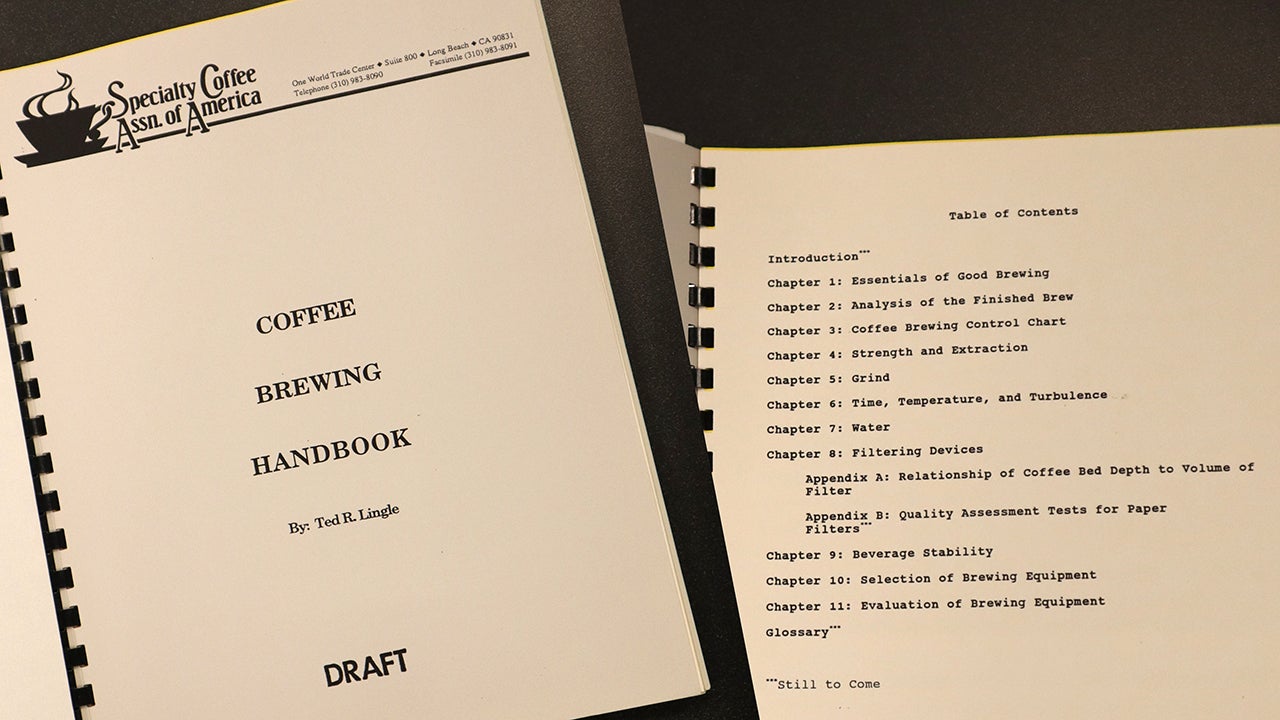
“That sense of teaching, training, bringing new people in, is what makes SCA different from other trade organizations,” said Ted Lingle, the association’s co-founder and former executive director. “People are open and willing to share within the industry group.”
He added, “I think the SCA’s records will show the power of cooperative, collective action as a fundamental driving force for the industry.”
The library is processing the collections to make them available for research, study and instruction.
Support for research
The coffee collections align with the teaching and research mission of the UC Davis Coffee Center in the College of Engineering and will facilitate interdisciplinary research, in keeping with the university’s approach to research and the nature of the beverage itself.
“We see every day how people build connections over a cup of coffee,” said William Garrity, university librarian and vice provost of digital scholarship. “It’s a beverage that builds community.
“Those connections extend to research, as well,” Garrity added. “Coffee sits at the intersection of UC Davis’ leadership in agriculture, food science and culture, and these three collections reinforce those links.”
Kramer hopes that the shared sense of community will encourage others to add their own knowledge and materials to the collection.
“There are people all over the world with a lifetime of knowledge on coffee they’ve collected, and it’s sitting in isolation,” he said. “What the library offers is the opportunity for a generation to bring that all together in one, objective place.”
Kramer continued, “The UC Davis Library will be the center of the world for coffee research — without a doubt. I’m convinced of that.”
Media Resources
- Online press kit with photos from the collections
- Read the library’s feature story about the three new coffee collections
- UC Davis Library Coffee and Tea Collections
Media Contacts:
- Jessica Nusbaum, UC Davis Library, 530-752-4145, jlnusbaum@ucdavis.edu
- Julia Ann Easley, UC Davis News and Media Relations, 530-219-4545, jaeasley@ucdavis.edu