

Southern California is emerging from yet another round of wildfires just as the wildfire season gets underway. It's been less than 18 months since catastrophic wildfires hit the communities of Altadena and Pacific Palisades.
The lessons from those twin 2025 fires are still being learned as researchers from University of California, Davis, and other institutions in the state and the country are working to understand the effect on air quality, human health and the environment.
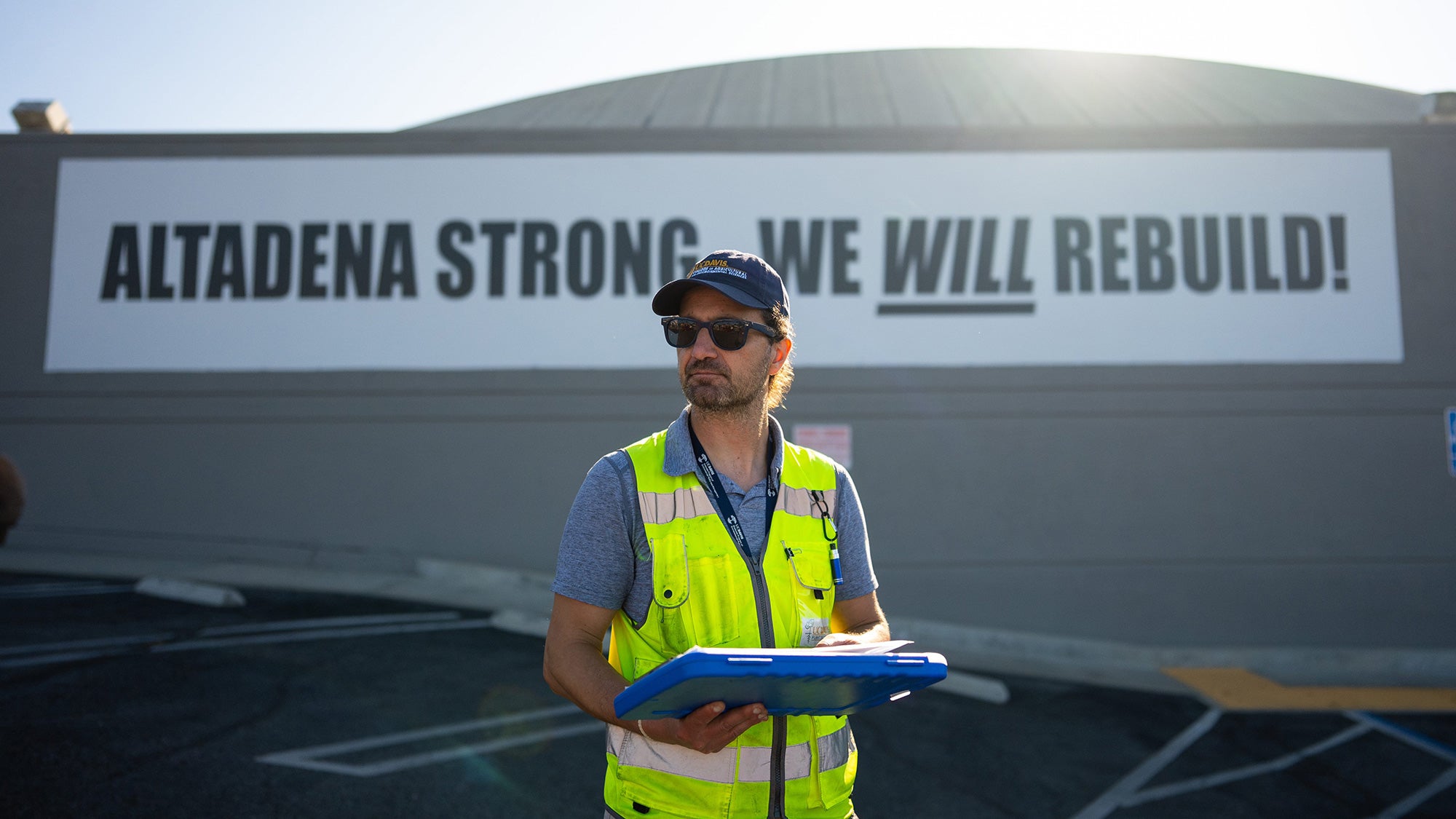
“Each year, the first widespread red flag days bring back memories and yet renew our commitment to fast-track our science,” said Alessandro Ossola, an agronomist and associate professor who runs the Urban Science Lab in the UC Davis.
The 2025 fires, which were fed by bone-dry conditions and Santa Ana winds, burned for 24 days, scorching 37,000 acres, destroying over 16,000 structures and killing 31 people.

Weeks later, as fire officials, first responders, utilities and the U.S. Army Corps of Engineers worked to clear debris and restore power and water to the area, Ossola and others went to the area.
“It was bigger and broader than anything we’d ever imagined,” said Michael Kleeman, a UC Davis civil and environmental engineering professor who measured air quality on five occasions in Altadena and Pacific Palisades from March to September. “It wasn’t just California that responded to this, and maybe that’s appropriate. It’s a national emergency when you start having fires like this.”
Ossola, from the UC Davis Department of Plant Sciences, is working to understand tree mortality and recovery and lessons that can be applied to rebuilding.
“As a scientist, it’s kind of heartbreaking and exciting and all the above in a single ball of emotions that I don’t even know how to untangle some days,” he said. “We have so much work to do in this space across California and other states. That’s why we’re here — to try to measure and document as fast as we can to figure out what to do next.”
The bounty of trees and the aftermath
After the fires, Ossola used public data and cataloged 220 different types of trees in public areas of both communities. Residents say the abundant trees represent the character, heritage and culture of the area, but they also provide shade, produce oxygen, help reduce smog and have other benefits.
During survey trips in March 2025, experts from UC Davis, UCLA, UC Agriculture and Natural Resources, the University of Florida and the U.S. Forest Service selected “hot spots” of tree richness and mapped 30 quadrants in Altadena and 15 in the Palisades on which to focus.
The team used lidar, which is light detection and ranging equipment, to scan and create 3D images of these scarred landscapes. A year later, using a mixture of lidar surveys and tree inspections, they returned to those same areas to measure what had survived, was removed or was dying.

“We are creating a 3D model and then we can compare this with data collected in previous years and also from federal agencies so we can see the trees from the ground, from the streets and also from the top,” said Ossola.
Early estimates show that Altadena lost 30% of its trees in public areas. Some of those losses came from the fire itself, during cleanup when trees were removed regardless of health and over time without proper watering or care as people relocated elsewhere.
“It’s difficult to see what the area is going to look like 20 years from now,” Ossola said. “We need to learn from our data what went right and what went wrong so we can adapt.”
While data is being analyzed and a dozen research papers and reports are planned, key lessons are emerging:
- Stucco and brick homes with terracotta roof tiles fared better than those with wood frames, something to consider when rebuilding.
- It often takes up to a year to know when a tree is too damaged to survive, and trained arborists should be involved in removal decisions.
- The damage to trees was directional, ignited by flames from houses, cars and other structures. In other words, the fire rarely moved from trees to buildings.
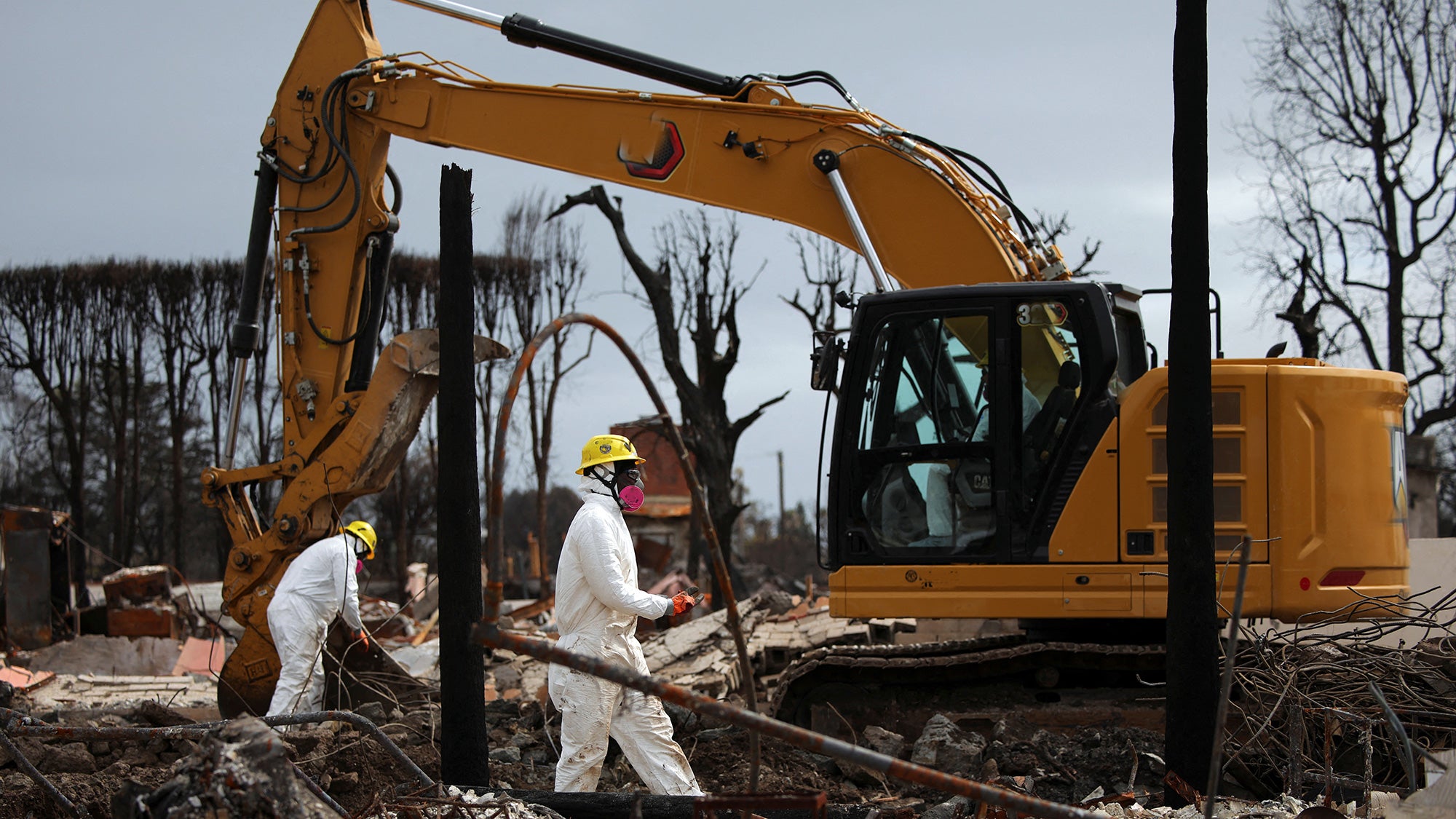
Why LA residents are protecting their trees
Early on, the researchers connected with Altadena Green, a grassroots organization established after the fire to help protect trees amid the large-scale cleanup efforts.
They provided residents with tree health assessments and helped convince the Army Corps of Engineers to grant hazardous tree removal waivers for residents who didn’t want trees removed during debris removal. The grant-funded work continues.
“There were so many people who the only thing left on their property were their trees, and they loved them, and they have a history,” Altadena Green Director and co-founder Stephanie Landregan said. “There were so many trees that were still viable.”
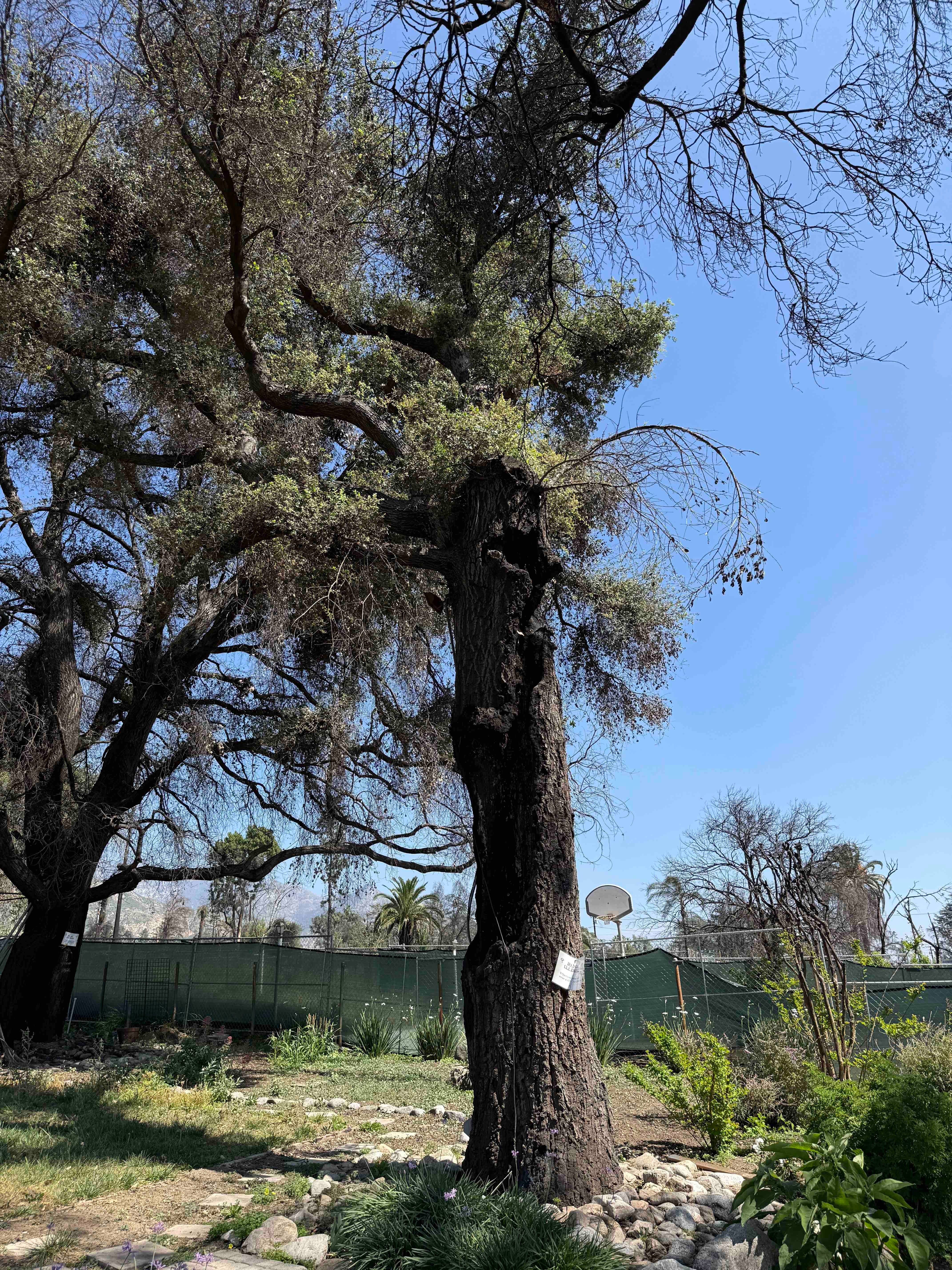
Residents around the area posted signs on their trees with directions not to remove them. Others left phone numbers tacked to the trees saying they were protected.
Jeff Henderson was one of those people. He spent his days tending to and watering his yard, plants and trees even after the house he shared with his wife for 35 years was destroyed. A handful of marriage ceremonies took place on the stone patio, overlooked by shaded oaks, flowers and other plants, and he contacted Altadena Green for advice on restoring the space.
“Everything was gone,” he said. “It was totally black. There wasn’t anything growing anywhere.”
Over time, the deep purple sweet pea shrubs returned, the lilac-petaled society garlic flourished, and crepe myrtle trees began coming back. Pale pink petals on a volunteer periwinkle started growing out of the patio.
“We’re trying to keep it as much as we can,” he told Landregan and others on a site visit in March.
How tree research could shape fire safety policy
The Hendersons hope to rebuild the house soon, and Jeff wondered what to do with the oaks, some limbs with new leaves and others barren.
“We see regrowth, which means that it’s moving water, it’s moving nutrients and it’s trying to survive,” said Chris Shogren, a Cooperative Extension environmental horticulture advisor, pointing to a dead limb that could be removed without harm. “You have to wait at least one full growing season before making any decisions. By then, you’ll have a clearer picture of how the tree is responding, what’s dead and what’s alive, and what kind of management plan it needs to survive.”
On one oak, Ossola used a tree resistograph that measures internal tree health for such issues as rot, decay and empty spaces using a tiny drill. “Good news is that that oak seems to be doing just fine, and there is no rotten wood inside the trunk,” he said after analyzing the results.
Natalia Bugarin, an Altadena native, who graduated from UC Davis in 2025 as a sustainable environmental design major. She took an urban forestry class before leaving Davis. Bugarin said it helped her understand the processes that led to the fires, and she has been reflecting on rebuilding.
“It’s not just designing your gardens to be more drought tolerant or heat tolerant, but it’s everything,” she said. “It’s how people interact with their gardens or even the neighborhood and community. It’s how people feel.”
Ossola said the research will help pinpoint areas of tree loss to help inform future policy decisions around fire safety, resilience and replanting. “In the next couple of years, we can support policy,” he said. “As soon as the buildings are built back, we will help communities prioritize planting and bring new life to the landscape.”
Hatch Project funding through the Agricultural Experiment Station, Wildfire Research Rapid Funding from UCLA and U.S. Forest Service supported the tree casualty research.

Why Scientists Are Testing Air Quality in Los Angeles After the Fires
Not long after the fires, Michael Kleeman, a UC Davis civil and environmental engineering professor, outfitted an electric pickup truck with air quality monitoring gear.
He drove to Los Angeles and monitored the air around the fire sites five times during the cleanup phase from March to September measuring air particles, volatile organic chemicals, black carbon and other pollutants.
“It’s really unique to have such a huge population exposed to both the active fire and the cleanup activities,” he said.
The results, published recently in the journal Communications Earth & Environment, showed the need for caution in the aftermath of urban fires: Measurements and model calculations showed roughly 3 million people in 100 ZIP codes in the western central part of Los Angeles were exposed to metals contained in particles from the debris removal emissions.
What’s more, the smallest airborne particles contained hexavalent chromium, a known carcinogen, at concentrations that warranted caution.
“We aren’t well equipped to filter out nanoparticles. When inhaled, they can cross cell membranes and circulate in our body. Inhaling hexavalent chromium nanoparticles is especially concerning,” Kleeman said.
The good news is that the hexavalent chromium had decayed into much less toxic trivalent chromium within a few months of the fire. Knowing what is left behind in the aftermath of a fire can help people avoid toxins, a lesson for future fires.
“Our measurements and model predictions warrant caution in the aftermath of urban fires,” he said.
Kleeman and other UC Davis experts in the School of Medicine, Environmental Health Sciences Center, Lung Center, Air Quality Research Center and College of Engineering are members of the LA Fire Health Study, a 10-year project evaluating pollutant exposure over time and the health effects of wildfire emissions.
Participating scientists are from around the country, including Harvard T.H. Chan School of Public Health, University of Texas at Austin, Yale University, UCLA, UC Irvine and Stanford.
Media Resources
- Alessandro Ossola, Department of Plant Sciences, aossola@ucdavis.edu
- Michael Kleeman, Department of Civil and Environmental Engineering, mjkleeman@ucdavis.edu
- Emily C. Dooley, College of Agricultural and Environmental Sciences, ecdooley@ucdavis.edu
- Amy Quinton, UC Davis News and Media Relations, amquinton@ucdavis.edu
Media Kit https://ucdavis.box.com/s/dx3batun188ga4hmoyjbz8iu9aa34cgh
For an in-depth story on UC ANR's work on the aftermath of the LA fires, visit UC ANR's Green Blog.