


They say summer is a time to slow down, but science stops for no one. From dogs and squirrels to concrete, whales and wetlands, here is a roundup of recent environmentally focused studies from UC Davis scientists.
Who let the dogs out? 12-year study finds dogs terrify squirrels
This summer, millions of people and their dogs will visit parks and wildlife areas. But what impact do humans and their canine companions have on the animals that call these places home? A new 12-year study on California ground squirrels reveals that life in human-dominated landscapes impacts animals very differently depending on their age. The study was led by Jennifer Smith, professor of biology at UW-Eau Claire, with Sonja Wild of UC Davis and published in the Journal of Urban Ecology. They are the same team behind 2024's eye-opening carnivorous squirrels study.
While adult squirrels were traumatized by domestic dogs, they showed reduced fear in areas frequented by humans, often with fewer natural predators. Surprisingly, stress hormones of juvenile squirrels spiked in areas with high human foot traffic. Luckily, just like humans escaping a loud city, researchers found squirrel stress levels dropped for those that moved to areas with less human and dog activity.
Read the full study. Contact: Jennifer Smith, smitjenn@uwec.edu.

Concrete’s hidden waste streams
We walk on it, drive on it, roll over it and build with it, but most people rarely consider the resources required to make concrete. A study in the journal Nature Sustainability shows that global concrete production requires far more resources than previously estimated.
The study, led by Sabbie Miller and Seth Kane in the UC Davis College of Civil and Environmental Engineering, found that 30 gigatons of mineral, energy and water resources are directly used to make concrete. When accounting for hidden flows and inefficiencies in the supply chain, that number approximately doubles. This suggests that “existing estimates drastically underestimate resource consumption of global concrete production,” the study said.
“There are substantial waste flows in the production of concrete — so great that they rival the quantity of product we get out,” Miller said. “We are in fact consuming about 66 gigatons of resources to get that concrete product.”
Understanding hidden waste streams is essential for reducing the environmental and resource burdens of concrete, which is produced mostly from local resources.
Read the full study. Contact: Sabbie Miller, sabmil@ucdavis.edu
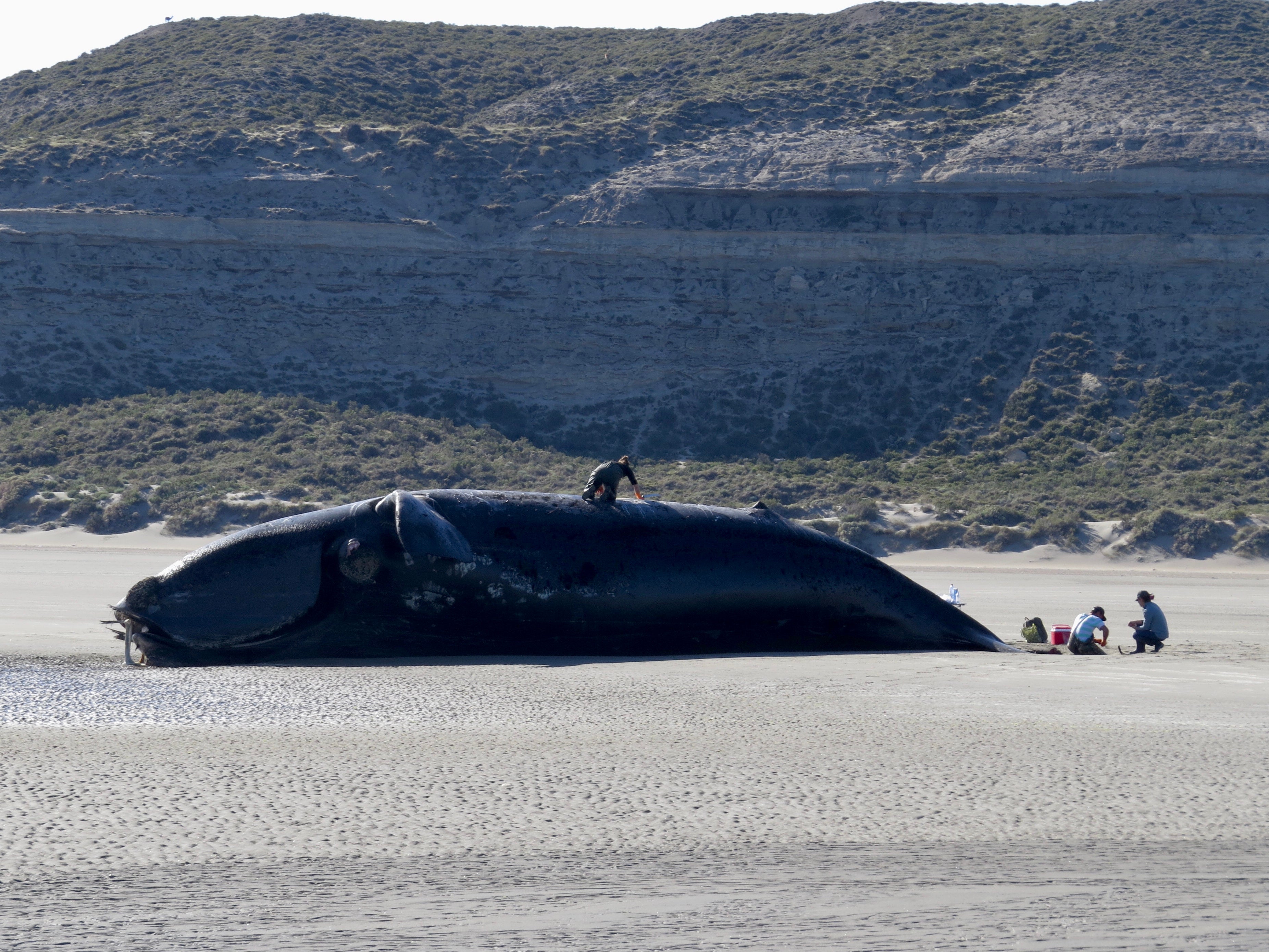
Plasticizers found in whales
Plastic pollution is not always visible. Plasticizers, which make materials more flexible and leach from plastics over time, have been found in the blubber of southern right whales in Argentina. A study in the journal Polar Biology provides the first evidence of phthalate exposure in southern right whales. It is also the first documentation of their accumulation in whale calves. Researchers detected phthalates in more than 90% of whales tested.
The study, led by Luciana Gallo from IBIOMAR with coauthors from the UC Davis Weill School of Veterinary Medicine, was made possible by the Southern Right Whale Health Monitoring Program. The program has investigated whale deaths and collected samples at Península Valdés, Argentina, for more than two decades. Such sustained monitoring efforts can reveal emerging threats.
“Southern right whales are sentinels of ocean health,” said corresponding author Marcela Uhart from UC Davis’ Karen C. Drayer Wildlife Health Center. “What we learn from them can help strengthen the broader message that reducing plastic pollution requires more than cleaning up visible debris. It also requires changes in how we produce, use, regulate, and dispose of plastics, along with changes in consumer behavior.”
Read the full study. Contact: Marcela Uhart, muhart@ucdavis.edu

Game meat linked to high blood lead levels in children
In a new study, researchers link high blood lead levels in children in rural Argentina to game meat consumption. Dietary items such as ducks and capybaras, commonly shot with lead ammunition, were associated with higher blood lead levels in children.
The study was led by Andrea Caselli of the National University of Central Buenos Aires with coauthors from the UC Davis Weill School of Veterinary Medicine.
Since 2007, the research team has documented lead poisoning in wildlife, wetlands and rice fields in the region — work that triggered the first lead ammunition bans in Argentina. This study focused on families who rely on wild meat. More than half of the children tested had high blood lead levels. Children who had eaten game meat had much higher levels than those who had not.
“This is clearly a major and preventable vulnerability, with possible lifelong consequences for children in already underserved communities,” said UC Davis coauthor Marcela Uhart. “We hope this research helps move the conversation from concern to action in areas and sectors, such as hunting tourism, that are still reluctant to change. Of all the One Health problems we face, this one has a proven, practical solution.”
Read the full study. Contact: Marcela Uhart, muhart@ucdavis.edu
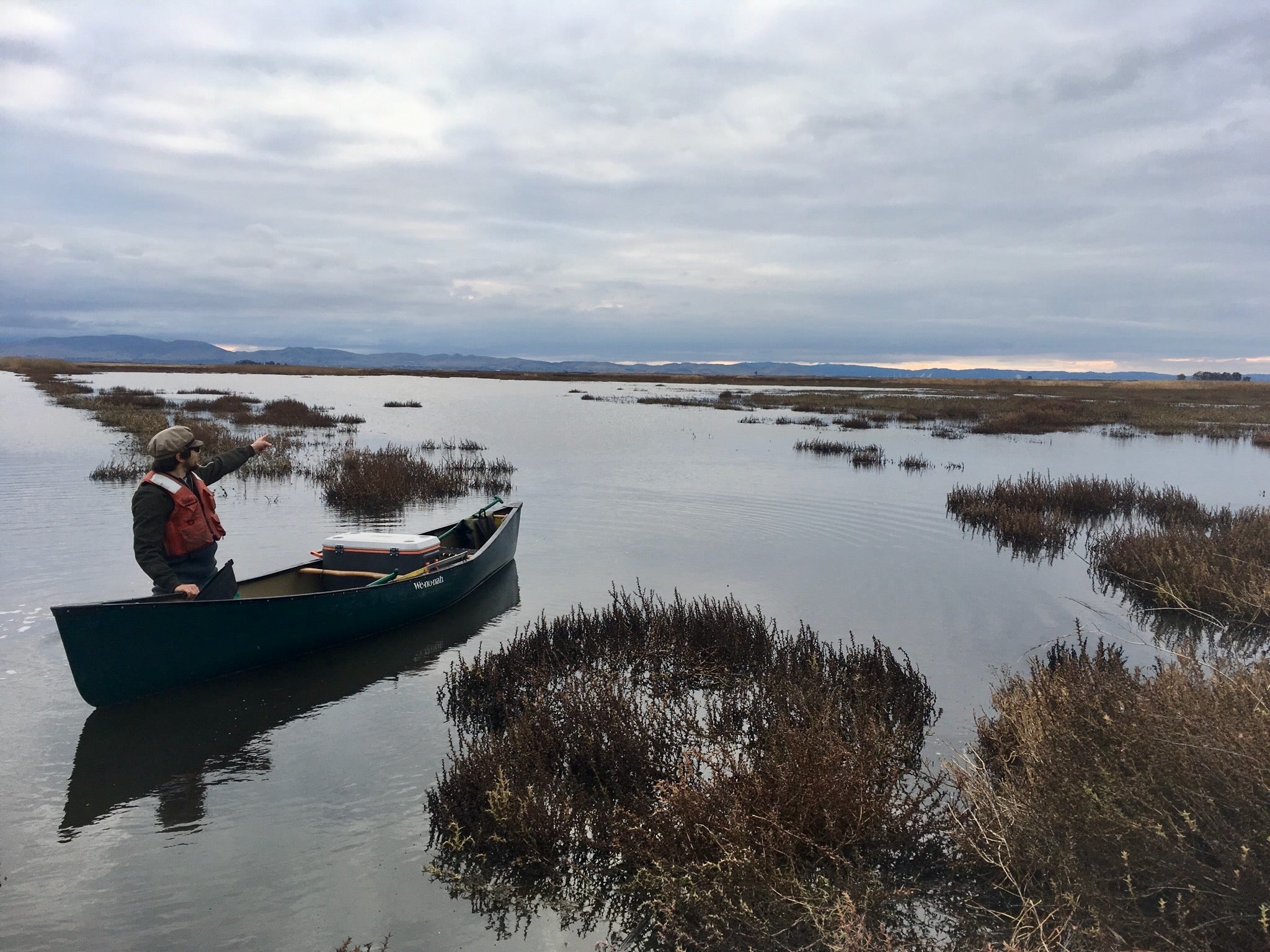
A new approach for wetlands
Converting managed wetlands into fully tidal systems may reduce habitat diversity and harm native species, finds a study from John Durand’s lab at the UC Davis Center for Watershed Sciences. The authors evaluated different wetland habitats in Suisun Marsh to understand how they support fish. Invasive fish species dominated restored tidal wetlands and slough channels, while managed wetlands supported more native fish, especially the three-spined stickleback.
In a complementary study, Durand’s team studied how fish, water quality and plankton responded to Dutch Slough, a large tidal restoration project in California’s Sacramento-San Joaquin Delta. They found that restoration design largely influenced the outcome. The authors suggest designers incorporate open water and improve connections to main waterways to enhance restoration success.
These papers, in addition to a study released earlier this year, are the culmination of nearly 10 years of research from the team.
“These studies provide reason to be skeptical that traditional restoration practices are achieving targeted benefits,” said Durand. “We are proposing a new approach to wetland creation and management.”
Contact: John Durand, jrdurand@ucdavis.edu
Media Resources
Kat Kerlin, UC Davis News and Media Relations, 530-750-9195, kekerlin@ucdavis.edu