


Bright orange rivers, a greening tundra, the “Atlantification” of the Arctic and record-breaking temperatures on both land and sea are among the emerging concerns highlighted in the 2025 Arctic Report Card from the National Oceanic and Atmospheric Administration (NOAA.) Now in its 20th year, the peer-reviewed report includes chapters by 112 authors from 13 countries, each dedicated to monitoring changes in the Arctic.
“We are no longer just documenting warming — we are witnessing an entire marine ecosystem transform within a single generation,” said Hannah-Marie Ladd, director of the Indigenous Sentinels Network on the Aleut community of Saint Paul Island. Ladd was among the panelists presenting the report today at the American Geophysical Union’s conference.
Rusting rivers
An example of this transformation is rusting rivers.
“In Arctic Alaska, over 200 streams and rivers have turned a rusty orange color, most in the past 10 years,” said panelist Abagael Pruitt, who coauthored the report’s “rusting rivers” chapter and is a postdoctoral researcher in Assistant Professor Brett Poulin’s lab at UC Davis. “Evidence suggests this is due to thawing permafrost soils.”
As permafrost thaws, water interacts with mineral deposits that empty into streams through acid rock drainage, carrying metals like iron, zinc, copper and aluminum into the water, turning it a striking orange color.
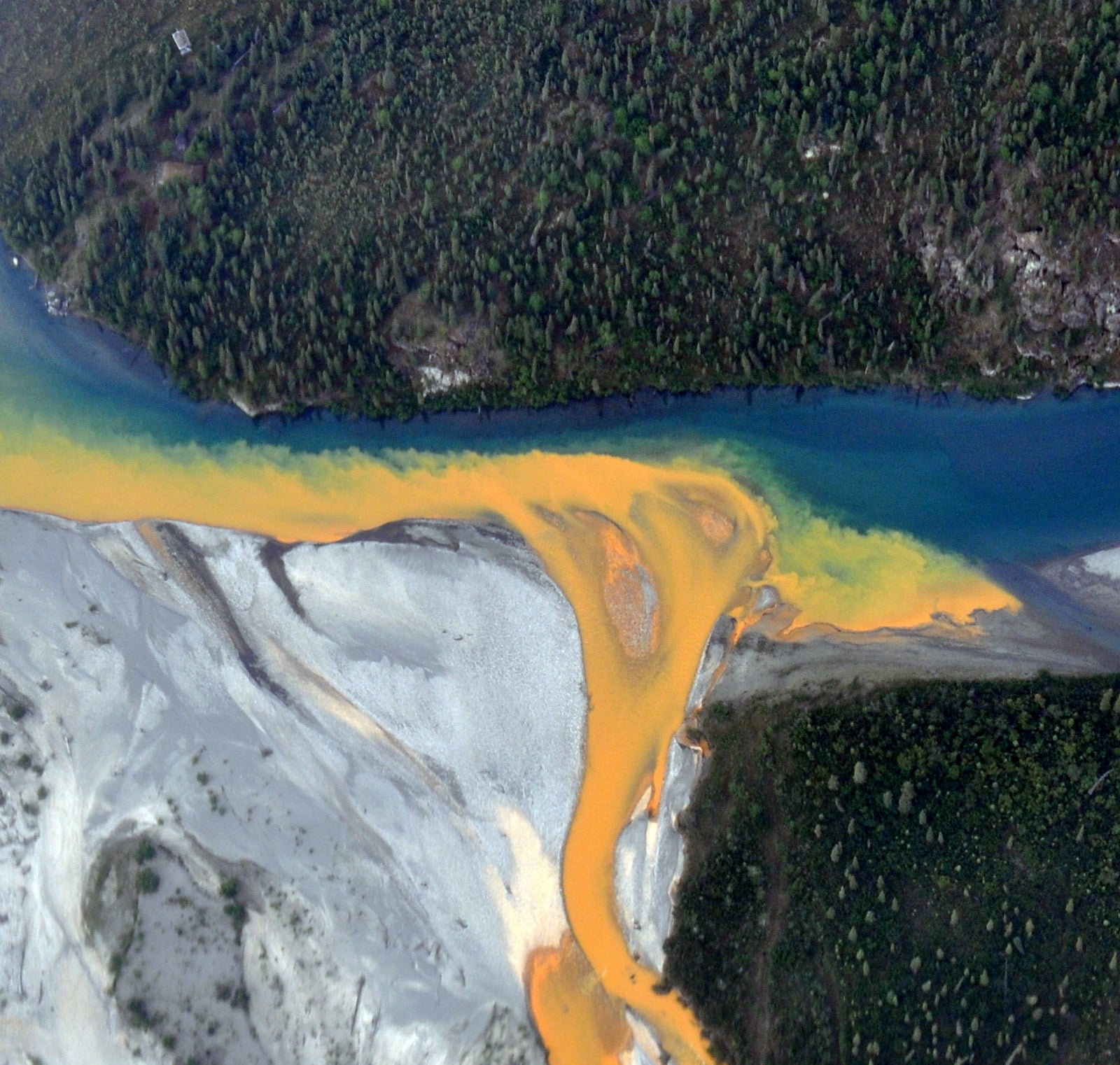
In a 2024 study, Poulin and colleagues sampled 75 affected locations in Alaska’s Brooks Range. Continued research reveals expanded locations in the state, stretching more than 600 miles from east to west, with concerning implications for people and wildlife that rely on the streams.
Pruitt said that while there’s not much people can do to slow the thawing permafrost, continued research can help us understand where rusting is occurring, where it’s not, and give people and wildlife a chance to adapt.
‘Atlantification’
Changes in sea ice cover are increasingly influenced by “Atlantification”— an intrusion of saltier, warmer water from the Atlantic Ocean into the Arctic.
“This is fundamentally altering the Arctic’s thermal structure and reshaping ecosystems,” said panelist Gabriel Wolken of the International Arctic Research Center at University of Alaska Fairbanks.
Wolken also said the Greenland Ice Sheet continues its decline, losing 129 billion gigatons of ice in 2025 and adding to global sea-level rise. (A gigaton is 1 billion metric tons.)
Glaciers are also thinning. In 2024, the last year for which data is available, glaciers melted faster than they accumulated snow, setting new records for ice loss. These trends undermine water security and can create hazards like floods, landslides and tsunamis.
‘We’re here today’
The 20th annual report was released at the end of a year of federal cuts to science, a government shutdown, interrupted data sets and other challenges.
“We’re here today, and we have released the 2025 version, and we’ve continued our long-term environmental observations in the Arctic,” said NOAA Assistant Administer and Acting Chief Scientist Steve Thur. “One of the things the community can rely upon is our efforts to continue to observe the planet will remain present.”
As is often noted, what happens in the Arctic does not stay in the Arctic. Dramatic losses of snow cover and sea ice change how solar energy is reflected and absorbed by the planet. That warms the Arctic as well as the globe, strengthening storms and raising sea levels.
“This was a year when we saw people stepping up, making thing happen and really hustling because all of us believe this is incredibly important information and for the people of our planet to learn this information as quickly as possible,” said Twila Moon, deputy lead scientist with the National Snow and Ice Center at University of Colorado Boulder.
Media Resources
Kat Kerlin is a press officer of environmental science with the UC Davis News and Media Relations team in the office of Strategic Communications. Reach her at kekerlin@ucdavis.edu.