

Happy Friday! Time for another roundup of the week's research news from UC Davis.
How apps make hits
Cuihua (Cindy) Shen, a UC Davis professor of communication, has been working with colleagues in China to study how the major music apps, TikTok and Spotify, shape your listening. They don't show a lot of overlap: TikTok leads with dance music and indie artists, while Spotify carries love songs and major labels.
“Hit song charts represent both user feedback and selections curated by the platforms’ algorithms that also influence users’ choices,” Shen said. “By publishing hit song charts, platforms are declaring what songs are visible and dominant.”
If someone wants to present these findings in a viral dance video or playlist I will be happy to share it.
Training for in utero surgery
UC Davis Health researchers recently reported the first safety results from the first treatment for spina bifida combining stem cells with in utero surgery. If this kind of treatment is to become widely adopted, surgeons will need to train on the incredibly complex task of operating on a fetus inside the womb.
Research engineers at the UC Davis Department of Biomedical Engineering worked with the surgeons to develop a training model, 3-D printed at the Tech Foundry at UC Davis Aggie Square.
“The fetal operation requires technical precision and is only available at very few centers in the world,” said Payam Saadai, a professor of surgery at UC Davis Health, “so the fetal model directly supports this work by creating a safe, reproducible environment where our team can train and refine these techniques, dramatically shortening the learning curve for such a complex operation.”
Robots inspired by origami
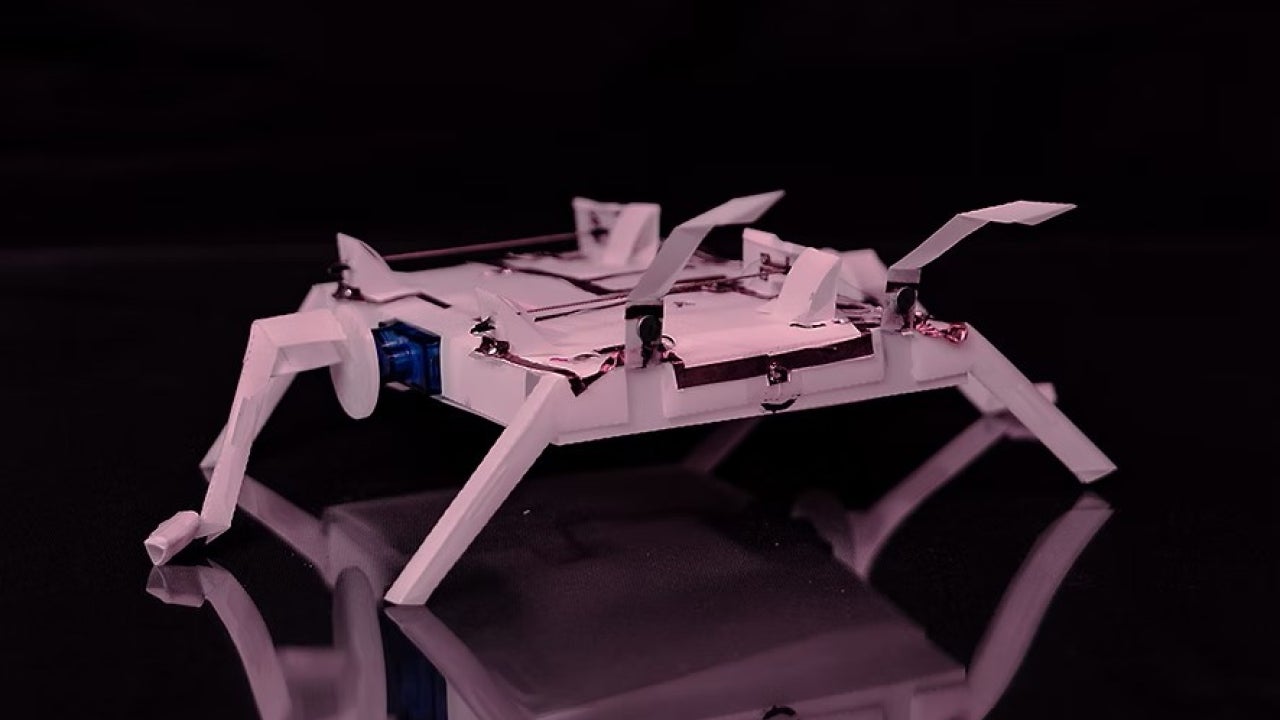
Wenzhong Yan, who recently joined the Department of Mechanical and Aerospace Engineering as an assistant professor, is designing robots inspired by both biology -- how animals make use of simple mechanical systems to do things -- and origami, with sensors and controls built into the materials of which the robot is made. During his Ph.D. work at UCLA, he helped create an insect-like robot that could hop continuously powered only by light. Such autonomous bots, deployed in networked swarms, could roam through forests monitoring for wildfires, for example.
“It pulls together my interests in biology and animals and machines and creating machines like animals,” Yan said. “In the future, I will try to create a robot like a human or like animals that is very robust and can do useful things.”
The New Yorker on psychedelics
After decades of being shunned as illegal drugs, there is now enormous interest in drugs like LSD, ketamine and DMT as treatments for depression and other disorders. Many practitioners of psychedelic therapies argue that the hallucinogenic experience is essential to healing. But is this true?
David Olson, professor of chemistry and director of the UC Davis Institute for Psychedelics and Neurotherapeutics, believes it is possible to separate the cure from the trip. Clayton Dalton takes a deep dive into his work for The New Yorker magazine.
Help wanted: Ph.D. Poké-ecologists
According to a news report this week, the Pokémon Company is recruiting people with Ph.D.s in ecology. The story notes that the company's latest game gives players the ability to design habitats to attract Pokémon with different needs and behaviors. Presumably, people with Ph.D. level expertise in plant and animal ecology can help design these new creatures and environments.
Now, which university can you think of that is among the best in the world for graduate programs in ecology and evolutionary biology?