


In 2025, UC Davis once again proved why it stands among the world’s leading research universities — not only by pushing boundaries, but by telling the stories that help people understand why breakthroughs matter. Many of those breakthroughs start as federally funded projects, and countless members of our campus community jointed together this year to voice support of that work through our From Labs to Lives project. Including federal funding, the university received $961 million in external research awards for the fiscal year 2024-25 — another measure of the broad impact that starts here at UC Davis.
Below is a showcase of the year’s top UC Davis stories.
Discoveries in the Natural World
An Extreme Tree Hunt in the Sierra Nevada
UC Davis forest ecologist Hugh Safford spotted a familiar tree at an unfamiliar altitude while hiking in Sequoia National Park last September. His discovery of a Jeffrey pine at 12,657 feet of elevation sparked a research inquiry and a scientific journal article examining the role of climate change in allowing the tree to propagate at such altitudes. We chronicled Safford’s discovery, and the science behind it, in a widely read story and later accompanied Safford in the High Sierra for a multimedia feature about the trees and the birds that store and distribute their seeds.

Dining Out with San Francisco’s Coyotes
In San Francisco, coyotes proved just how adaptable they are. A UC Davis study revealed that what these urban predators eat depends on the block they roam, chicken and other human-sourced foods in heavily paved areas, rats near restaurant hubs, and more natural prey where green space remains. The research showed coyotes aren’t struggling to survive in the city; they’re thriving by learning their neighborhoods and sticking to what works. It was a reminder of how closely urban wildlife and human life are intertwined.
Native Turtles Return to Yosemite After Removal of Invasive Bullfrogs
In a conservation success story, a professor and a Ph.D. student in the UC Davis Department of Wildlife, Fish and Conservation Biology found that northwestern pond turtles returned to Yosemite National Park after invasive American bullfrogs were removed. Their research could have applications in other parts of the West where the bullfrogs prey on young, vulnerable turtles, decimating their numbers.
New Species of Spider Discovered, Just in Time for Halloween
Emma Jochim, a doctoral student in the UC Davis Department of Entomology and Nematology, along with her colleagues analyzed genomic DNA from Aptostichus simus spiders collected across areas ranging from Moss Landing near Monterey to Baja California. The scariest part about this discovery isn’t the spider, it’s what could happen if its home is lost for good. These habitats are shrinking due to many factors including development, erosion, wildfire and sea-level rise.
Advances Shaping Human Health
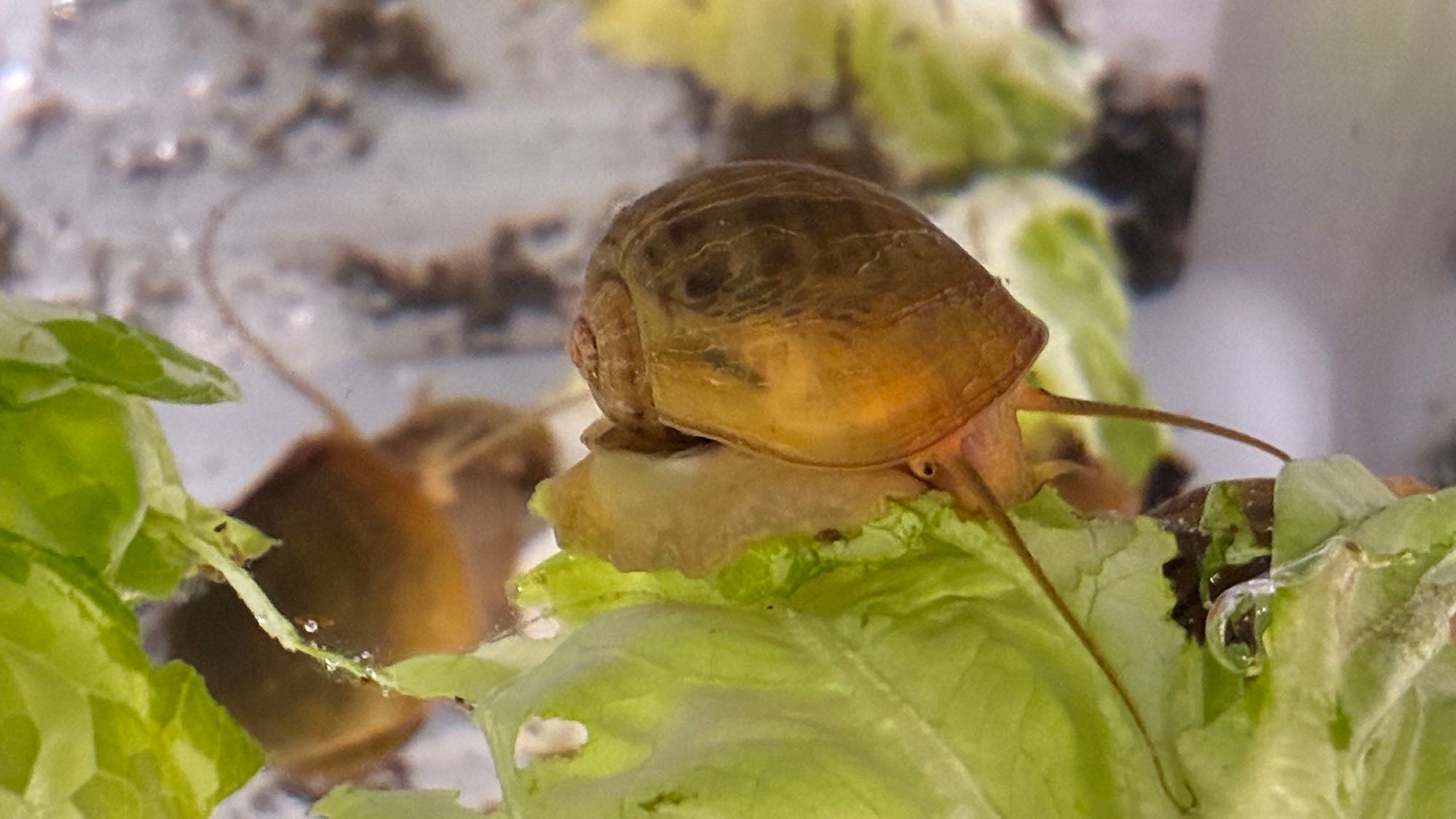
This Snail’s Eyes Grow Back: Could They Help Humans Do the Same?
A humble snail could hold the key to humans being able to cure blindness by regrowing lost or damaged eyes. Apple snails and human eyes share many anatomical and genetic features, UC Davis assistant professor of molecular and cellular biology Alice Accorsi noted. Unlike humans, the apple snail can completely regenerate its eyes. Accorsi is studying how, someday, humans might be able to do the same. The research shows how the road to a scientific or medical breakthrough often winds through unlikely detours.
New Cancer Drug Could Help Cats and People
Scientists from UC Davis and UC San Francisco have collaborated on a new drug that has shown promise in combating cancer in cats. While a worthy goal on its own, developing the drug could lead to new treatments for humans afflicted with head and neck squamous cell carcinoma. Researchers are currently working with a small biotech company to advance the new compound in clinical trials for both pets and humans. UC Davis and UCSF partnered on a release and resources for media, highlighting the positive impact of research by University of California campuses.
MORE BEST OF 2025
Researchers Develop an LSD Analogue with Potential for Treating Schizophrenia
UC Davis researchers unveiled a breakthrough drug, JRT, designed to harness the therapeutic power of LSD without the hallucinogenic effects. This game-changing compound could offer new hope for treating schizophrenia and other brain disorders. By tweaking LSD’s molecular structure, the team created a drug that promotes brain cell growth, improves cognition and even outperforms ketamine in antidepressant effects. It does it all while avoiding the psychosis-inducing side effects. As JRT continues to show promise in early trials, it’s poised to reshape treatments for neuropsychiatric conditions and could mark a new era in psychedelic-inspired medicine.
Illuminating Our Communities
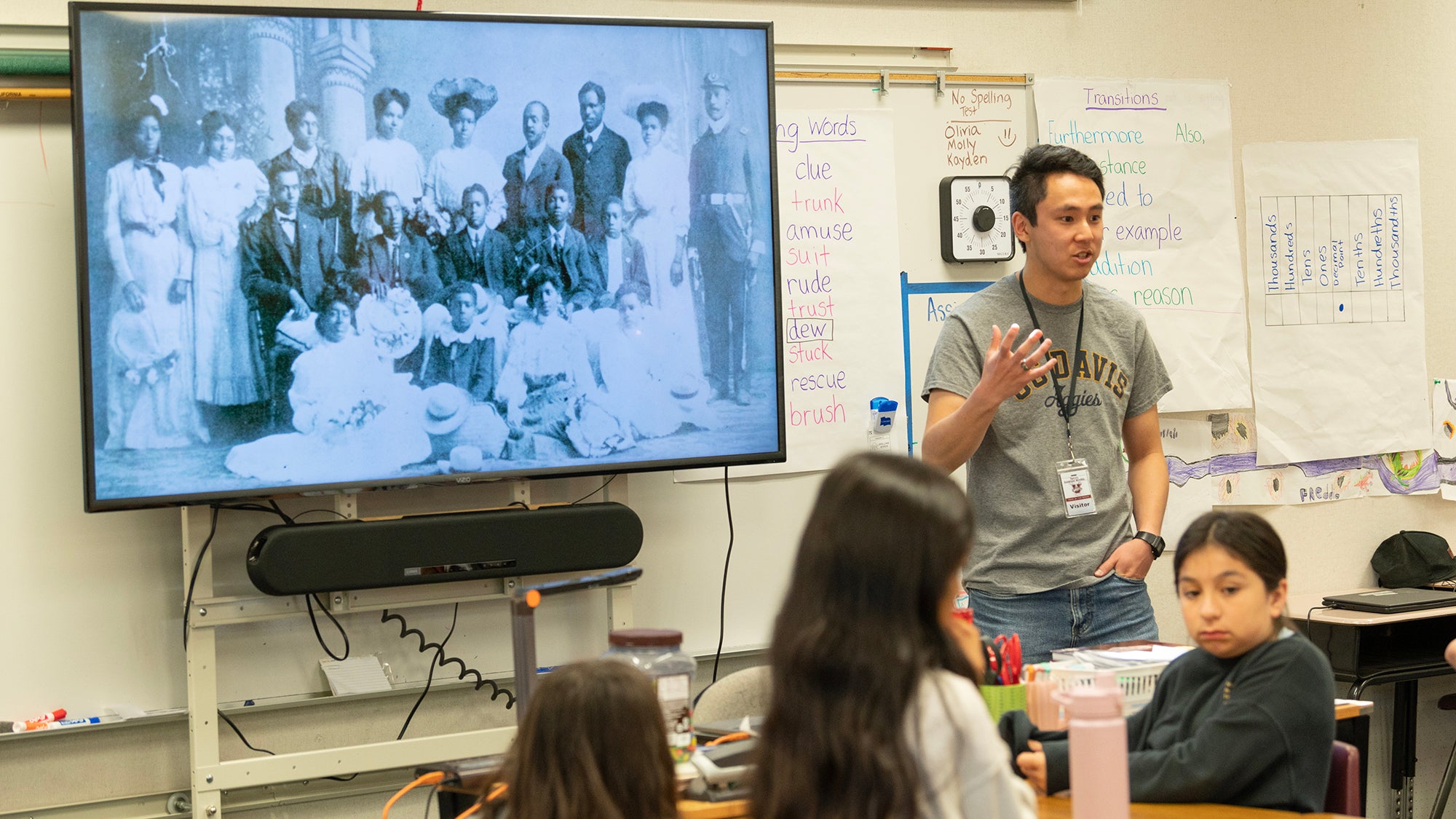
UC Davis Students Uncover History of a Little-Known Black Community in Woodland
Through the eyes of UC Davis students under the leadership of associate professor of history Cecilia Tsu, associate professor of history at UC Davis and a faculty advisor for the California History-Social Science Project, we told the story of a little-known chapter of Black history in the Yolo County community of Woodland. The undergraduate and graduate students eventually collected enough material to develop elementary school lesson plans and a digital presentation as well as create a display now on view at the Woodland Opera House State Historic Park.