

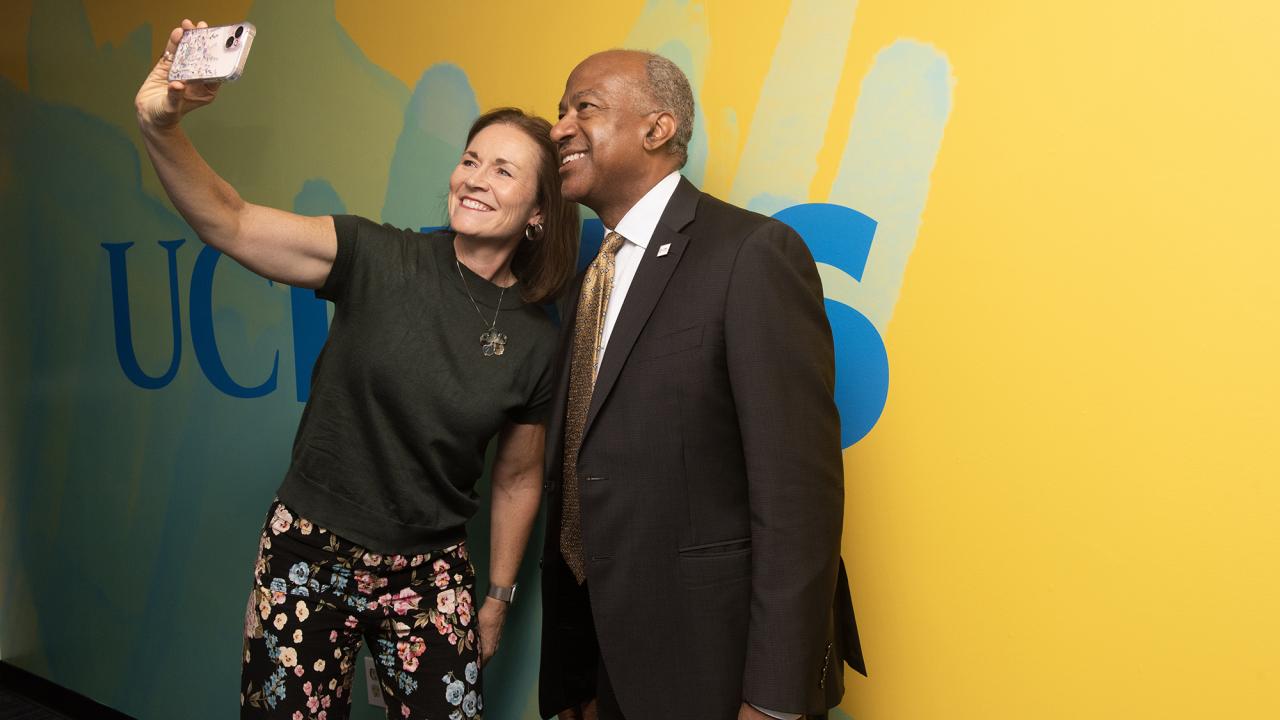
Federal funding supports much of the research aimed at improving maternal health outcomes and reducing long-standing inequities, according to Leigh Ann Simmons, a professor at the Betty Irene Moore School of Nursing.
She is this month’s guest on Face to Face With Chancellor May, where she described how public research dollars make it possible to study pregnancy not only as a short-term medical event but as a predictor of lifelong health.

"My research focuses primarily on maternal health equity, looking at pregnancy as a way of seeing if we can identify some precursors to later-life chronic disease that we can catch early," Simmons said. “The focus is on prevention rather than reaction.”
A central component of her work focuses on individuals who have experienced adverse childhood experiences. Early trauma is linked to higher risks of poor maternal outcomes and chronic illness across life. Her research examines how resilience shaped by supportive relationships, community resources and responsive health systems can mitigate those risks.
Rather than designing solutions in isolation, she emphasizes collaboration with community partners to address systemic inequities embedded in maternal health care and research.
“One thing I learned is being a really good listener,” Simmons said. “Really listening to hear and not responding first, and then taking those learnings and turning them into action items with the help of the community.”
In the conversation, Simmons also emphasized the importance of the broader effects of federal research investment. Beyond individual studies, federal grants support research infrastructure, interdisciplinary collaboration and more.
“We get to really show what it means to have an interdisciplinary, transdisciplinary mentorship team. How do you then take a person from biomedical engineering, and then another from family medicine, put those two people together, and say they're going to help you with your science?” Simmons said. “It's not possible without federal funding and we see a huge return on investment.”
May agreed.
“The research is certainly important, but also the training of the next generation of scientists and researchers like yourself is important,” May said.
Watch the episode to learn more about Simmons’ research, her advice on being a mentor and more.

Media Resources
Anila Lijo is a writer and editor for the Office of Strategic Communications, and can be reached by email.