

To the UC Davis Community:
Spring at UC Davis is a season of transition. Students are already eagerly registering for commencement, and just a few weeks ago, we opened our doors to thousands of new students, notifying them of their acceptance to the Class of 2030.
They will arrive at a time of profound change, just as our current graduates prepare to leverage their skills in a shifting landscape. According to the World Economic Forum, 39% of workers’ core skills will change by 2030 as technological shifts propel the economy in new directions. Shaped by artificial intelligence, global competition and economic disruptions, the workplace is changing more rapidly than at any time in recent history.
This moment is both unsettling and exciting. While our students have the opportunity to shape this revolution, a 2025 Handshake survey found that 56% of undergraduates are pessimistic about their career prospects. That's why at UC Davis we’re focused on ensuring our graduates leave here with the skills and confidence they need to pursue the jobs they love.
Iliya Voytsyshyn, a fourth-year systems and synthetic biology major, exemplifies how we are future-proofing education. Rather than just assisting in research labs, Iliya became a key collaborator in labs exploring cancer and genetic conditions. In one project, he worked with Associate Professor Kyle Fink, developing a custom app that solved a data-collection bottleneck, accelerating their research. The lab’s innovation offers hope that patients with Rett syndrome, a genetic condition that affects mostly girls, may receive care sooner. As Connie Champagne at the UC Davis Comprehensive Cancer Center says, “Where others see problems, Iliya sees opportunities and pursues creative solutions.”
This is the UC Davis difference in action. Our charge is clear: we must ensure students leave campus ready not just for their first job, but for a lifetime of adaptation and leadership. We start that process when they arrive and continue it through graduation and job placement.
Powerful communicators and critical thinkers
Preparation for the workplace of the future demands graduates who can explain and solve complex problems. As the American Association of Colleges and Universities, or AAC&U, notes, three in four employers cite the need for effective communication and critical thinking.
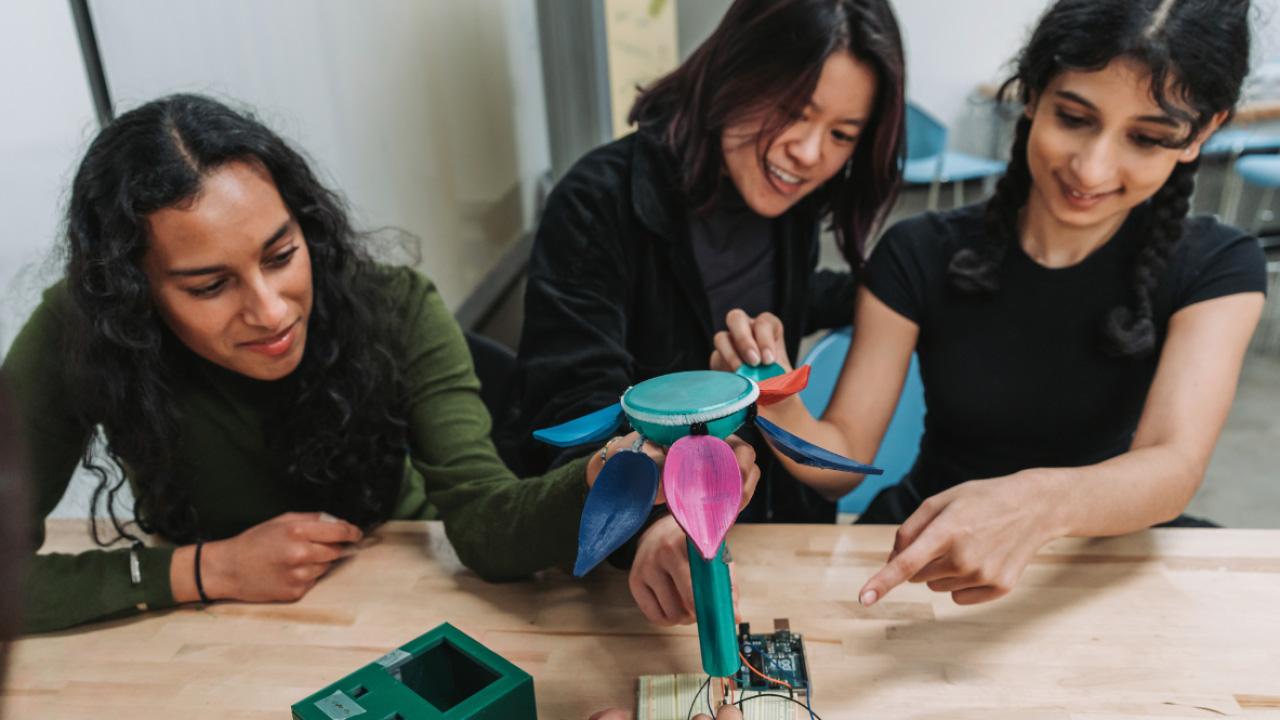
Students build these skills in Assistant Professor of Teaching Vivian Vuong’s ENG3: Introduction to Engineering Design. This “crash course” in the engineering process centers on discovery and critical thinking. Students aren’t given a problem to solve. Instead, they are given broad prompts such as education or climate to identify and prototype scalable solutions. This approach encourages students to problem-solve and develop innovations, such as LED-integrated devices for ACL therapy and ergonomic tools for elderly acai harvesters in China.
Student teams move from discovering a challenge to developing a concept and creating a prototype, culminating in a final poster presentation to a broader campus community. By successfully pitching their design logic and technical work, students are equipped with effective communication skills they can use to successfully interview for campus research lab positions, where they can continue to build their skills.
Another critical skill is the ability to translate complex concepts into clear, human terms. Whether bridging cultural gaps with patients or explaining research to the public, the most prepared students are empowered to listen to and authentically advocate for communities and individuals in need.
This mission comes to life through the Critical Medical Humanities minor. Offered through the College of Letters and Science as part of Quarter at Aggie Square, students immerse themselves in the social forces that define health, tracing ideas about healing from medieval thought to the high-stakes data of the machine age. By engaging with voices that have written the rules of medicine, from Black AIDS activism in the 1990s to Mesoamerican traditional healers, our students learn to see the person behind the patient. We are training a new generation to build a health care system as compassionate as it is precise.
Hands-on experience
According to the AAC&U, more than three-quarters of employers say they are more likely to hire graduates who participated in “high-impact practices” and hands-on experiences during their undergraduate years.
At UC Davis, we are committed to making these opportunities available to our students. Over half of our students take part in meaningful internships, lead campus organizations and collaborate as partners in our labs, building their understanding as they work on community and volunteer projects.
A new $9.8 million grant for College Corps will allow 225 students annually to engage in service, leadership, professional development and financial literacy programs while receiving a stipend to support their education. They will join the more than 700 students who have served the community in classrooms, food distribution centers and other areas over the past four years.
Sometimes, these experiences take our students outdoors. Last spring, students from the College of Biological Sciences pioneered a new Course-based Undergraduate Research Experience, or CURE, class in our Arboretum. In the course, led by Professor Philipp Zerbe, students mapped plant species and extracted metabolites, chemical compounds plants use to communicate, to deepen their understanding of lab work and research methodology. As Alya Samsudin, one of the students in the course, said, “As a transfer student, I was nervous to join a lab because I felt like I didn't have enough experience, but taking the CURE class was a great entryway into research.”
At the College of Agricultural and Environmental Sciences, internships are built into the curriculum with most majors requiring students to complete one. As a result, 71% of graduates complete one or more internships. The college supports career-readiness for first year and transfer students from the moment they arrive on campus in a program called Career Discovery Groups. Led by graduate student mentors, these groups connect students with campus resources and provide advice to navigate graduate school and the workforce. Students also connect with peers and professionals in an experiential learning class that helps them uncover and prepare for diverse career paths.
Career transitions
We’re committed to ensuring our students have support as they transition from the university to their next step, whether that’s continuing their education or entering the workforce.
At the Career Center, a team of counselors and peer advisors helps students translate the skills they developed on campus into professional value. Students receive help building personalized resumes, attend career fairs like the one scheduled for April 15 to connect with employers and participate in workshops on networking and interviewing. These resources remain available to alumni for up to one year after graduation.
Fourth-year sociology major Sophie Lewis has worked in the Career Center since last year and has seen its impact on her own career search. She credits the center with creating a sense of belonging for every student, from first-years to those on the verge of graduation. In her own law school applications, counselors provided invaluable advice on preparing letters of interest and her resume, helping her strike the right balance between promoting her skills and remaining concise.
Ensuring that students are prepared for the workforce includes our graduate student population, 70% of whom will pursue careers outside academia. The newly reconstituted GradPathways Institute plays a vital role in supporting the graduate students who are central to our teaching and research mission. Its holistic approach recognizes that graduate students need support ranging from financial well-being to mental health. In seminars for graduate students and postdoctoral researchers, participants explore effective teaching strategies, publishing, and career searches. GradPathways also hosts a speaker series highlighting industry leaders who share their stories of career success and overcoming challenges.
The enduring value of an Aggie education
A UC Davis, education is more than a degree; it demonstrates a proven capacity to lead in any environment. I always say that my goal is for every student to cross the commencement stage with a job or graduate school placement in hand, or an entrepreneurial venture in progress. However, our impact is about more than earning a paycheck or an admission letter.
While the economy will continue to shift, the core of a UC Davis education — effective communication, relentless innovation and critical, global thinking — remains a constant.
That commitment to global thinking resonates as the ongoing conflicts around the world and economic disruptions at home remind us that we are more interconnected than ever. In this time of heightened tensions and increased worry, I know that our Aggie community will come together with respect and concern for one another, even as we may encounter disagreement and strong emotions.
That same spirit of care should extend to our digital lives. I’d like to take this opportunity to remind our entire community to be vigilant online, guarding against both disinformation that seeks to divide us and cyberthreats that compromise our security.
The landscape is changing, but I am filled with optimism as we celebrate our graduates this spring and welcome the Class of 2030 this fall. No matter the challenges, our students are ready to become the architects of a healthier, more resilient and more sustainable world.
Sincerely,
Gary S. May
Chancellor