


Spending entire days — or longer — trying to find meaning in a single poem is the opposite of quick, online activity many students might be used to, but that type of slow study is something that still resonates with them, Professor Archana Venkatesan said.
“In this world where we are watching 30-second TikTok videos and attention spans have become so abbreviated because of screen time and the internet, reading and drawing people to poetry that is difficult — that requires work to understand — is value in and of itself,” Venkatesan, a professor of religious studies in the College of Letters and Science, said.
Her primary focus is a group of 12 poets — 11 men and one woman — who lived between the sixth and ninth centuries in South India and wrote devotional poetry about the Hindu god Vishnu. Venkatesan described their work as beautiful, evocative and at times, erotic.
AMONG THE ACADEMIES
UC Davis has dozens of faculty members who belong to some of the most prestigious membership organizations in the world, a recognition of their distinguished and continuing achievements in research.
Each month, Dateline UC Davis will profile one of these faculty members in honor of their contributions to research and knowledge. Starting with this month, the series will now include members of the American Academy of Arts and Sciences.
Together these poets are known as the Alvars, which translates to “those who are immersed in god,” Venkatesan said. They wrote in Tamil, one of the longest-surviving languages in the world.
Despite the centuries between the original poems and today, Venkatesan said students tell her they can “feel their minds expand” when studying them, even though almost all of her students are STEM majors.
“I’ve always felt the students here are so thirsty for this kind of (work) and in my class they just drink and want more,” she said. “With the rise of AI there is such a need. The students are thirsting for these things that require that kind of hard work.”
She recalled a group of about 10 STEM majors who asked for help continuing their study of poetry after finishing her class; Venkatesan and the students met for a year-long intensive reading class. Venkatesan taught the class on overload — beyond her expected workload — and said the students always showed up prepared and had deep, thoughtful conversations about the poetry in ways that were inspiring to her.
“They would often say to me, ‘This is a stress reliever to me. My labs are so stressful, my exams are so stressful, I'm always worried about this or that. This is where I come where it's nothing but pleasure,’” she said.
An unexpected path
There were several points along Venkatesan’s journey to UC Davis where she might have taken a different path. She grew up in Southern India, in the same state where the Alvar poets lived but hundreds of miles away. She grew up speaking Tamil but couldn't read it, and was unaware of their poetry as she grew up in English-language schools. She moved to the U.S. at 18 and attended De Anza College in Cupertino, planning to finish post-secondary education with a bachelor’s degree. Instead, a professor there “planted the seed of pursuing a doctorate,” and Venkatesan transferred to UC Berkeley on the next step toward that goal. At this point, Venkatesan said she was headed for a career studying European Romantic poets like John Keats, but a class on Tamil translation caught her eye. After her first class, she went to UC Berkeley’s Doe Library and checked out every book on Tamil literature she could find.
“I was like, ‘This is what I want to do for the rest of my life,’” she said. “It was a simple decision that ended up changing the course of my life.”
It’s a lesson she tries to impart on her students today.
“I remind them that college is not about going from A to B,” she said. “You have no idea what you will encounter that will completely change your life and the direction you will go.”
After earning a bachelor’s, master’s and doctorate at UC Berkeley, she worked briefly at St. Lawrence University in New York before joining UC Davis in 2007.
Last year, she was named the faculty director of the GradPathways Institute for Professional Development, an arm of Graduate Studies that supports graduate students and postdocs across four key areas: mentoring; equity and inclusion; professional development; and career-readiness.
In her time at UC Davis, she has earned numerous honors, including being named a Chancellor's Fellow, receiving a Guggenheim Fellowship and being named to the American Academy of Arts and Sciences in 2022. This month she was elected to a three-year term on the board of trustees of the American Institute of Indian Studies.
Fieldwork: festivals and more
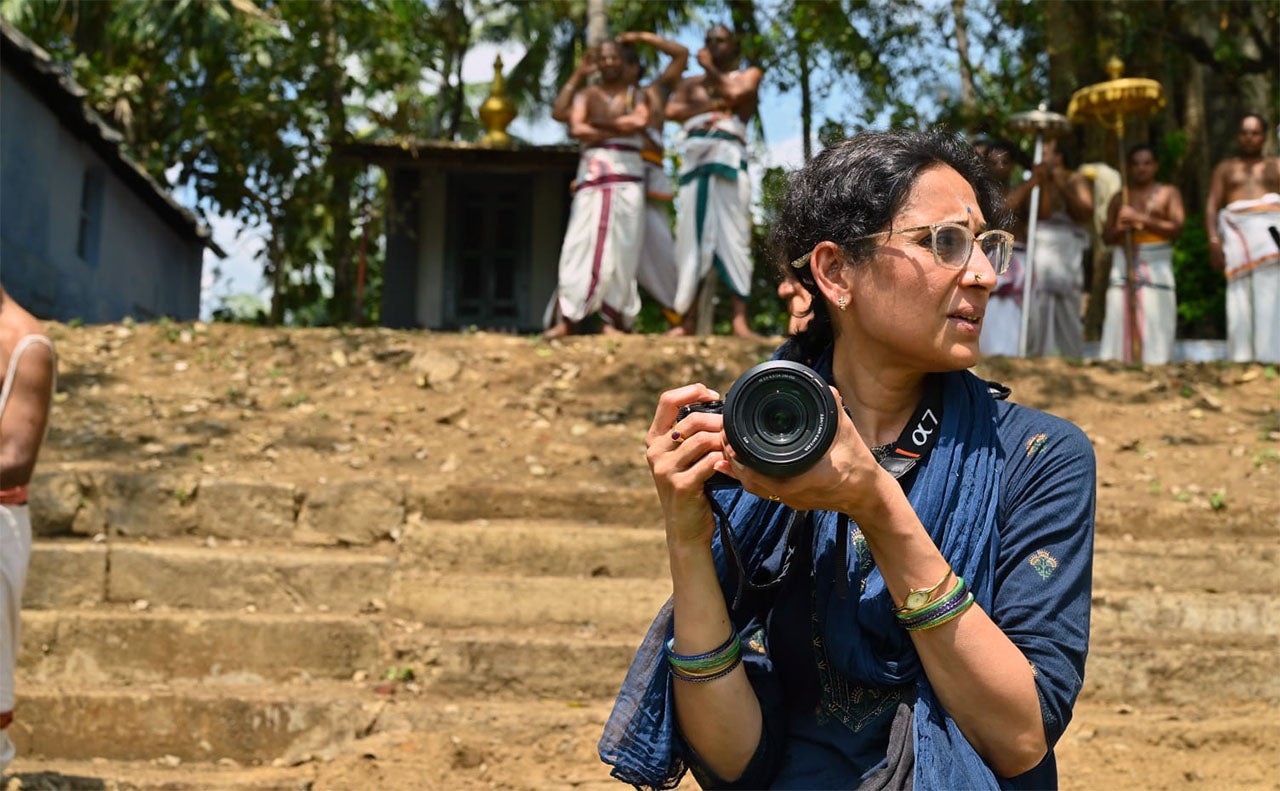
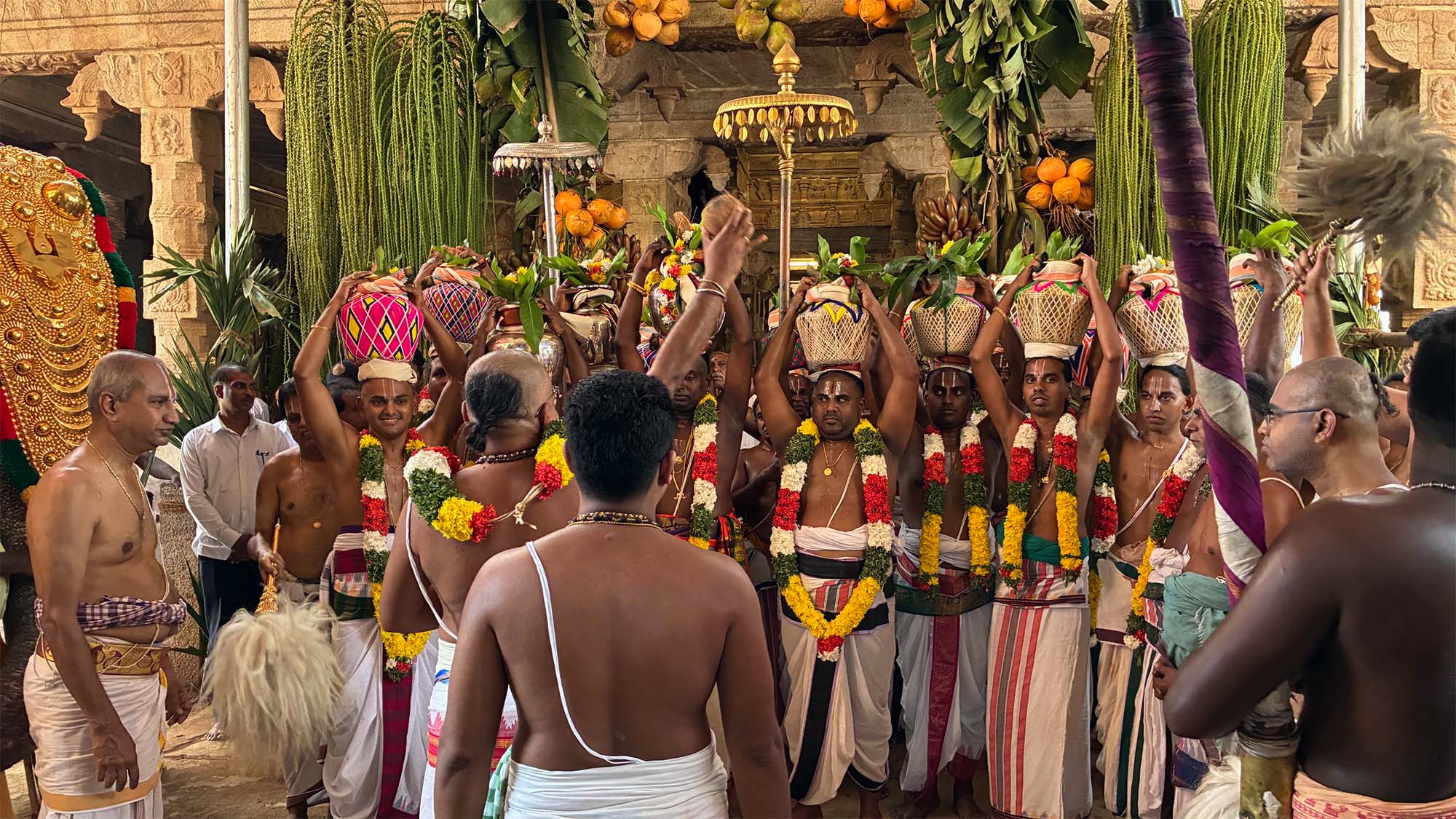
In addition to studying poetry in written form (and publishing translations of her own), another of Venkatesan’s main areas of focus is a 20- or 21-day festival in India called the Adhyayanotsavam, or Festival of Recitation, where seas of attendees pack into a temple and recite the poetry of the Alvars, performing complex rituals that often involve an overwhelming experience of food, music, fragrances and other activities that cause attendees to openly weep, she said.
She is studying the ways the festival recreates some of the feelings of longing — the separation and reunification with god — that are expressed in the poetry, aided by everything else that goes along with the recitation.
“Your senses are turned up to 11,” she said. “That's intentional, having that kind of sensory overload in order to reproduce this particular kind of effect.”
She also studies the connections between the architecture of a temple and the kinds of rituals that take place there, and just wrapped up weeks of “grueling but fantastic” fieldwork, including attending a multi-day event to resacralize a temple she has been studying since 2017.
“While I spend a lot of my time sitting alone with books and thinking about poetry, when you're in the field, that poetry comes alive,” she wrote in an email from India. “It's not just a thing on a page, but words that shape the devotional experiences of so many people.”
The event, she said, was also a reminder of the ways temples can change over time; the last time this temple held the ritual was in 1981, and a visiting researcher from the University of Pennsylvania chronicled a much simpler event than the one that took place this year, Venkatesan said.
Venkatesan said that while she may be studying poetry written more than 1,000 years ago, festivals like this show that it’s still having an impact by inspiring people to create dances, songs and other rituals that go on for multiple days.
“The poetry is still very much alive in today’s world.”
Media Resources
Cody Kitaura is the editor of Dateline UC Davis and can be reached by email or at 530-752-1932.