


It’s fitting that Pamela Ronald, who would go on to be named one of the world’s 100 most influential people in biotechnology by Scientific American, discovered her passion for plant biology while on a backpack trip near Lake Tahoe.
“I was 14 and met botanists when I was out hiking,” Ronald recalled. “I said, ‘What are you doing?’ They said: ‘Oh, this is our job. We identify plants and we hike in the mountains.’”
AMONG THE ACADEMIES
UC Davis has dozens of faculty members who belong to some of the most prestigious membership organizations in the world, a recognition of their distinguished and continuing achievements in research.
Each month, Dateline UC Davis will profile one of these faculty members in honor of their contributions to research and knowledge.
The effect of this chance run-in was immediate.
“It was the first time I seriously imagined having a career."
Ronald went on to receive degrees in biology from Reed College, Stanford University and Uppsala University before earning a Ph.D. in molecular and physiological plant biology from UC Berkeley. She then served as a postdoctoral fellow in plant breeding at Cornell University before joining UC Davis. Ronald is currently a distinguished professor in the Department of Plant Pathology and the Genome Center. She also serves as a faculty scientist at the Lawrence Berkeley National Laboratory’s Environmental Genomics and Systems Biology division and is the director of grass genetics at the Joint BioEnergy Institute. She joined the UC Davis faculty in 1992.
Genetic breakthroughs
It’s no understatement to say that Ronald’s research has impacted the lives of millions. Beginning in the 1990s into the 2000s, Ronald was part of a group of plant scientists from UC Davis, UC Riverside and the International Rice Research Institute in the Philippines (IRRI) who identified a gene in a specific variety of rice found in Orissa, a state in India, whose growth was not thwarted by frequent regional flooding. Consumed by half of the world’s population, rice is difficult to grow outside of shallow waters, with millions of impoverished farmers losing critical crops annually to floods.
With federal funding from the U.S. Department of Agriculture, Ronald and her collaborators identified at the genetic level how flood-resistant rice thrives into higher yields across several different varieties. This genetic isolation contributed to the breeding by UC Davis/IRRI scientist Dave Mackill, making it possible for six million Indian and Bangladeshi subsistence farmers to grow Sub1 rice varieties. Her previous research on rice helped identify new ways plants and animals detect and respond to infection.
Ronald was elected to the National Academy of Sciences in 2019 and the American Academy of Arts and Sciences in 2022.
Watch an example of flood-tolerant rice (International Rice Research Institute)
Federal funding challenges
Despite her success, Ronald hasn’t been immune from the recent cuts in federal research funding. While in the middle of two separate five-year grants, Ronald’s work came to a halt.
“I got a frantic message saying, ‘[the Department of Energy] has said we're not going to get funded fully for our last two years. Stop spending, stop hiring and slow everything down,’” Ronald explained. “It was very difficult.”
And though Ronald received federal funding for this project this academic year, the future is still unknown.
“I don't want my students or postdocs to have to think about money,” she said, “I want them to just appreciate science, learning [and] each other.”
Mentoring the future
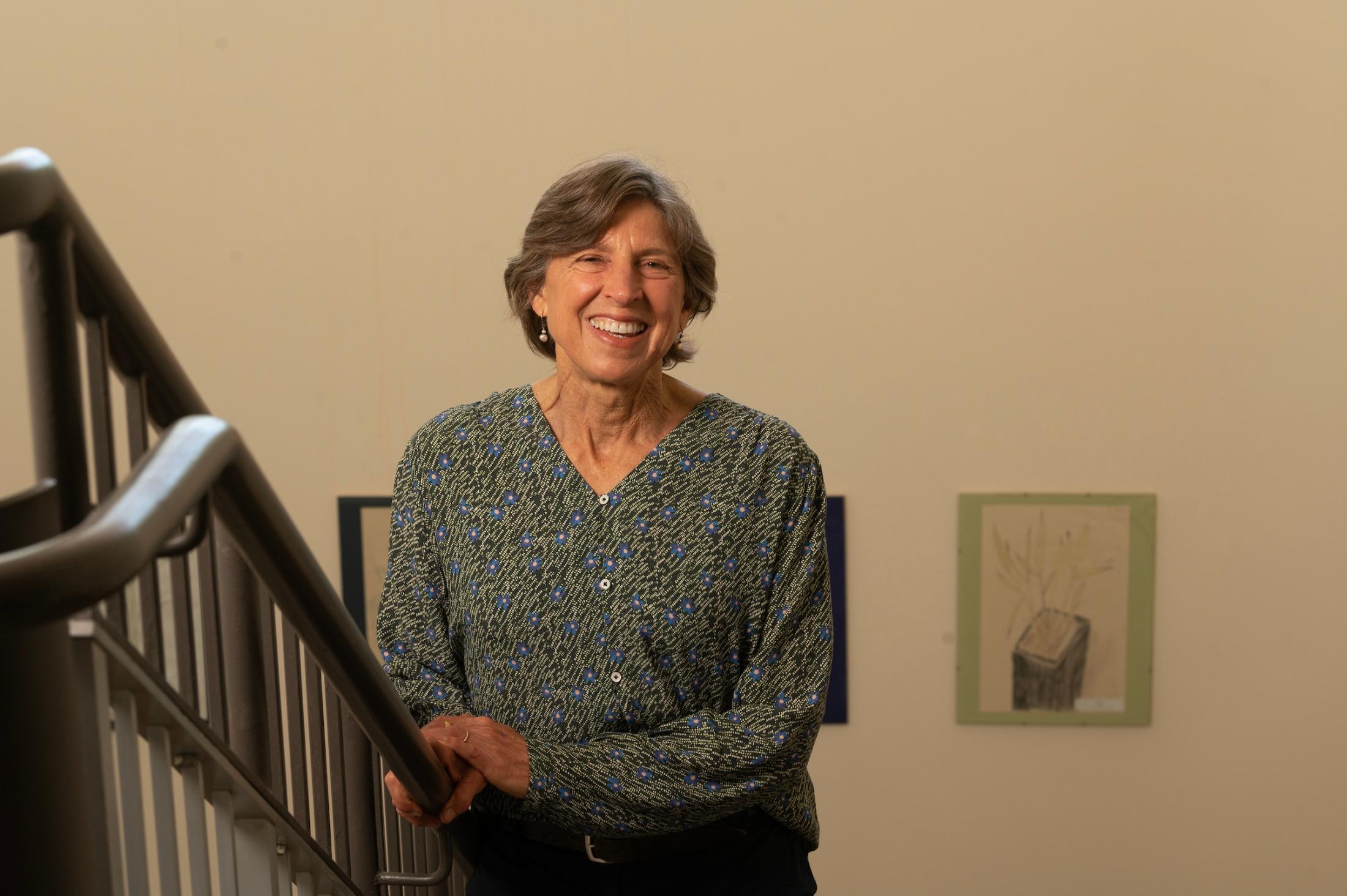
Ronald currently works with four graduate students and roughly six undergraduates and six postdoctoral fellows, and a handful of technicians. Though she continues to pursue her own research, her focus is increasingly on the future of such cohorts and the new technologies they are advancing, including machine learning approaches within plant biology.
“At this stage in my career, it's all about mentoring, helping my students and having the guidance they need.”
Ronald noted that she’s still learning “all kinds of interesting things” from her students and their new technological approaches to a field she’s contributed to for decades.
“It's been a really nice time in my career,” Ronald reflected. “I think I'm the happiest I've been.”