


Ocean plastic pollution is accidentally on the menu for southern giant petrel chicks. Even small nibbles of it may affect their physiology during development, according to a study from the University of California, Davis, and Argentina's National Research Council (CONICET).
Lea este comunicado de prensa en español.
Southern giant petrels are not of high conservation concern globally, but they are particularly susceptible and useful sentinels for understanding how ocean plastic pollution affects wildlife.
With a range stretching from Antarctica to Chile, Argentina, Africa and Australia, these large birds frequently forage at the sea surface, where floating plastic tends to accumulate. Adults can accidentally transfer plastic they eat to their chicks when they regurgitate food.
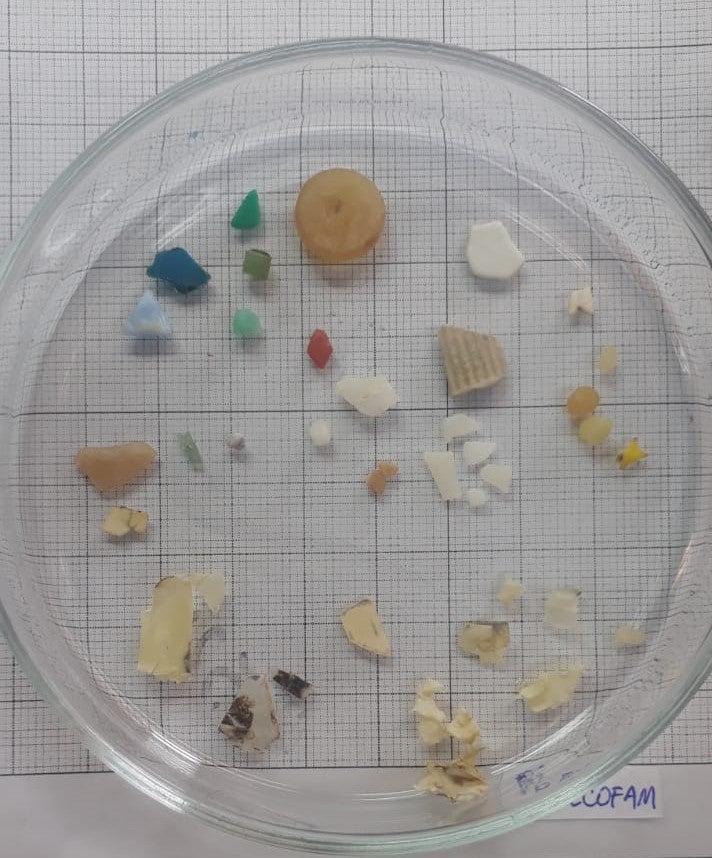
The study, published in the journal Ecotoxicology and Environmental Safety, detected plastics in more than 71% of chicks. This suggests that most petrel chicks are inadvertently fed plastic by their parents.

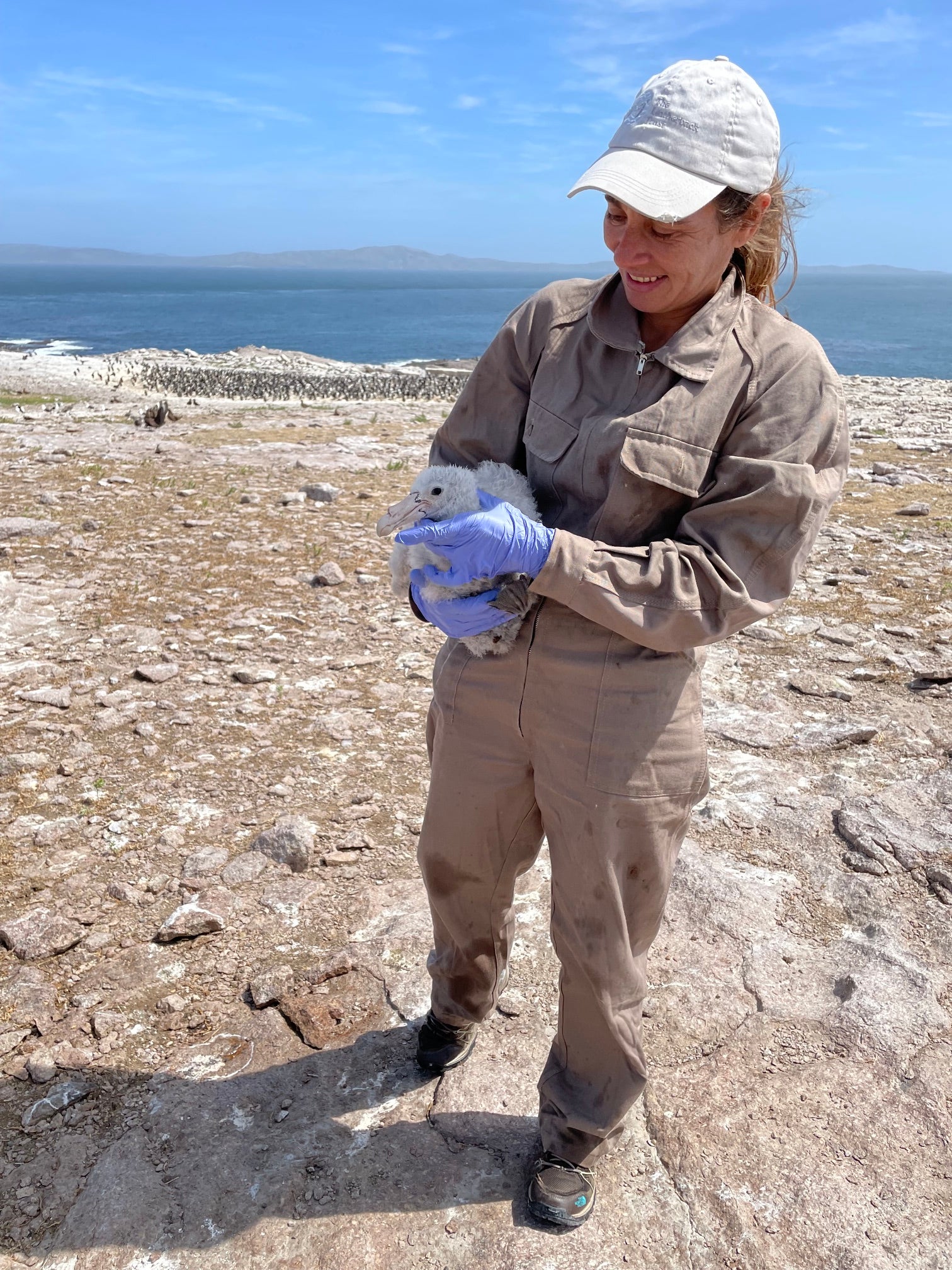
To understand the effects of ingesting plastic on the chicks’ health, the researchers sampled and examined southern giant petrel chicks at two key stages of development during 2022 and 2023 in Patagonia, Argentina.
“We found that it doesn’t take a stomach full of plastic to leave a biological signal,” said corresponding author Marcela Uhart, a wildlife veterinarian with the UC Davis Weill School of Veterinary Medicine and its Karen C. Drayer Wildlife Health Center.

Small amounts matter
The amount of plastic recovered was small relative to the body mass of the chicks. Yet even at these low levels, eating plastic was associated with potentially adverse changes in the health of young chicks, especially for those around one month old. The health changes were related to nutrition, body condition, metabolism, liver and muscle function and immune response.
“What surprised us was not just how many chicks had plastic, but how little plastic it took for us to detect a biological signal,” said first author Luciana Gallo from CONICET. “Counting the pieces of plastic only tells us part of the story. These chicks appeared healthy, and the amount of plastic we recovered was tiny, yet we could still see changes in indicators related to nutrition, metabolism and immune function.”
Understanding exposure
By the time the chicks were close to fledging, at around three months old, most of these changes had weakened or disappeared. Whether that means the chicks compensated as they grew or that plastic exposure and physiological responses operate on different timescales remains an important unanswered question, the authors note. One of the signals that remained was glutathione S-transferase or GST, an enzyme that helps cells process foreign chemicals and defend against oxidative stress.
Counting the pieces of plastic only tells us part of the story." —Luciana Gallo, CONICET
“From a conservation standpoint, these kinds of subtle physiological changes can provide an early warning before obvious illness, mortality or population-level effects are visible,” Uhart said. “For long-lived seabirds such as giant petrels, which reproduce slowly and are already exposed to multiple pressures at sea, even small effects on chick development, survival or later recruitment could matter over time.”

The study is part of the team’s broader efforts to understand the impacts of plastic ingestion on seabird health, survival and reproduction. It also builds upon their related research on plasticizer exposure in marine wildlife.
The study’s additional authors include Flavio Quintana of Institute of Biology of Marine Organisms (IBIOMAR, CCT CENPAT-CONICET) and Andrés Attademo of the National University of the Litoral-CONICET.
The study was funded by a grant from the Agreement on the Conservation of Albatrosses and Petrels (ACAP), as well as the Wild Animal Health Fund, a program of the American Association of Zoo Veterinarians.
Media Resources
Press kit. Download with photo credit listed in file name.
Media contacts:
- Marcela Uhart, UC Davis Weill School of Veterinary Medicine, muhart@ucdavis.edu (Based in Argentina. Fluent in Spanish and English)
- Luciana Gallo, IBIOMAR, CCT CENPAT-CONICET, gallo@cenpat-conicet.gob.ar (Based in Argentina. Fluent in Spanish)
- Kat Kerlin, UC Davis News and Media Relations, 530-750-9195, kekerlin@ucdavis.edu