
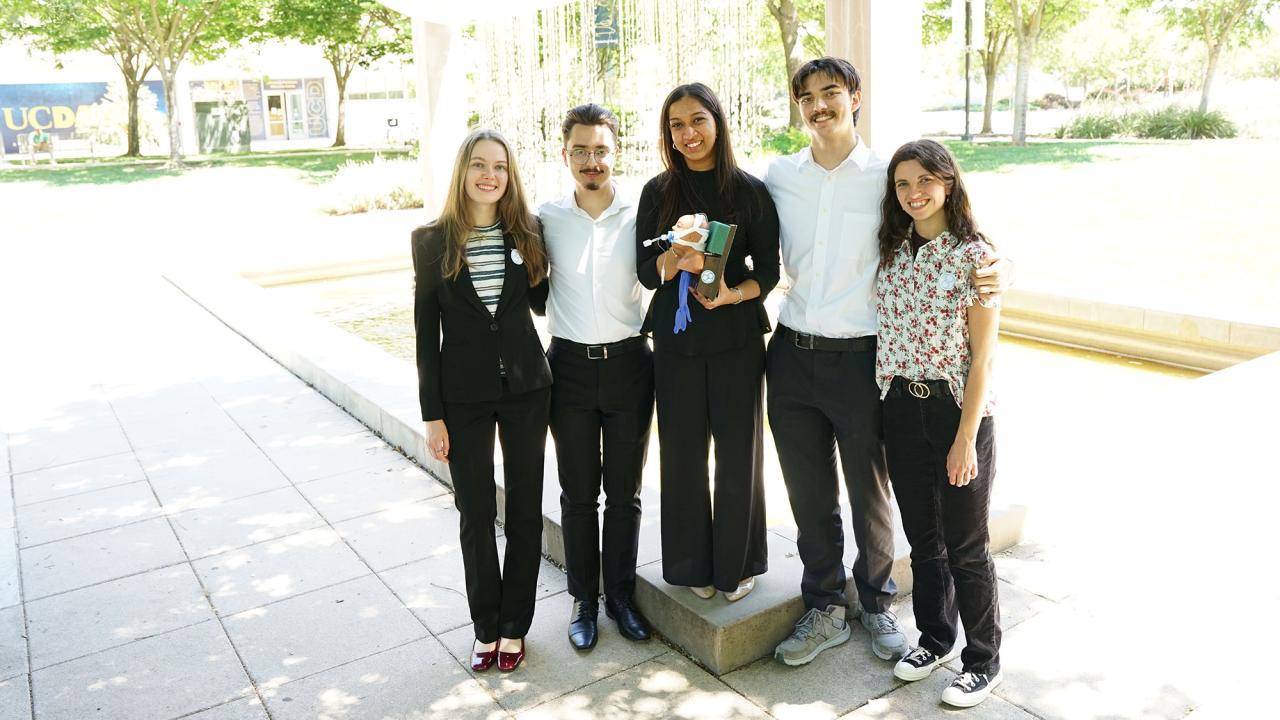
When biomedical engineering students walked into a room of clinicians at UC Davis Health, they carried two medical device prototypes. One was an alum’s late-night sketch, while the other was theirs.
What unfolded in that room over several hours became the basis for First Bite, a medical device designed to safely secure breathing tubes for infants. It was also the start of a uniquely UC Davis partnership bringing together an alum, medical experts and a team of engineering students.
The alumni perspective
At the core of First Bite is entrepreneur and medical doctor Benjamin Wang ’06. Wang built his company, NEVAP, on a breathing tube for patients on mechanical ventilation.
Working in hospitals, Wang noticed breathing tubes for infants often slipped out, leading to emergencies in which the child is unable to breathe. He knew a better design was possible, sketching some ideas onto a napkin, but he didn’t have the resources to pursue it.
Tiffany Chan, a UC Davis biomedical engineering master’s student who was working as an intern for Wang, suggested he submit his idea as a senior design project for Aggie engineers. The senior design project tasks all graduating engineering students to translate a concept into a prototype for a product, device, process or software.
“I thought, ‘Maybe I can throw them this drawing, and at the same time, I can teach everything involved in bringing an idea from the back of a napkin to putting it in front of the Food and Drug Administration,” Wang said.
Driving student success
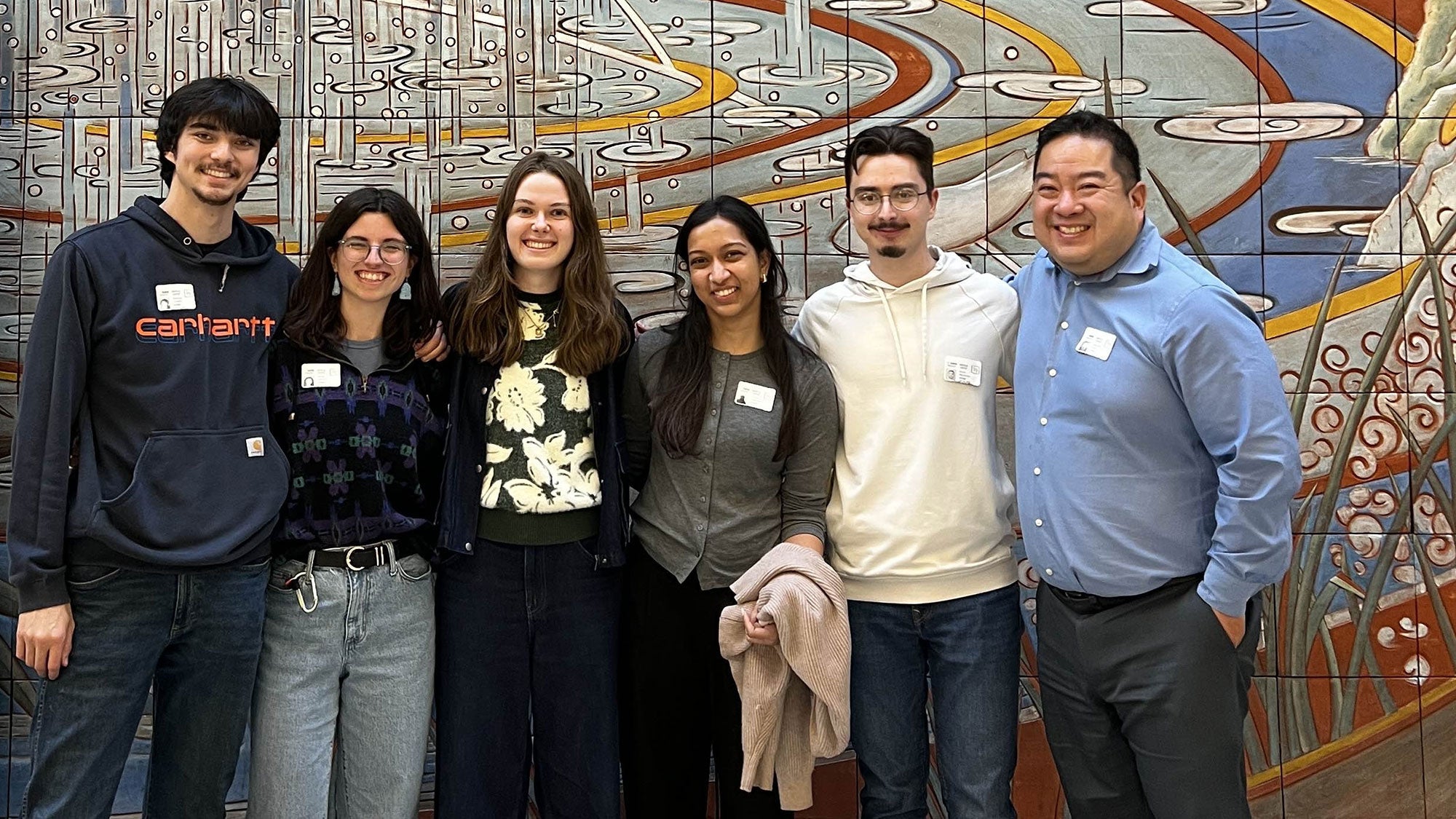
Running down the list of project ideas in their senior capstone design class, biomedical engineering students Camilla Lindh, Phineas Tucker, Lakshmi Penumasta, Rachel Amstutz and David Melnichuk knew that Wang’s project was the one for them.
“We really liked the industry connection. We wanted to understand every aspect of what it would take to make a medical device,” Lindh said.
Their first meeting with Wang was a late-night Zoom call.
“I will give you guys inventorship,” he said across the blue-light divide. “I want you guys to have patent rights, but I also want you to be pushing yourselves and driving toward something as fast as you can.”
His commitment spoke to them. More than a grade for their capstone design class, they wanted to learn how to make something that would make it into a doctor’s hands.
The clinical side of things
To help move the design forward, Wang connected the First Bite team to industry and clinical experts. Perhaps the most important was Brian Smith, a pediatric clinical educator and respiratory care leader at UC Davis Health.
Smith was the one who organized the fateful meeting when the First Bite team brought prototypes for feedback. While the early 3D-printed prototypes were rough, he and the clinicians knew that one of them — the students’ head strap approach — had a lot of potential.
The First Bite team took Smith’s and the other clinicians’ feedback as a road map. They also continued seeking direction from clinicians across UC Davis Health, who always found time to help them. For example, the Center for Simulation & Education Enhancement loaned the team medical equipment and testing mannequins.
“No one ever told us, ‘No,’” Tucker said. “It was very much a community-born project.”
Smith said he was struck by how much the students took from these conversations.
“They got feedback from hundreds of people,” he said. “Every time they came to us, you could see that they were making actual engineering changes to their product based on the feedback they had received.”
A medical innovation and a lasting partnership
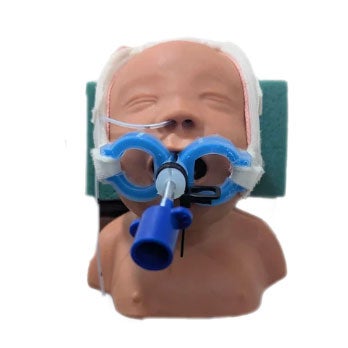
After more than 3,000 hours of work, the First Bite team landed on a final design.
Using a head strap, First Bite secures a breathing tube to an infant’s mouth. This avoids the use of adhesives, which is where current methods often fail. The device also lasts about four days before it needs to be replaced, which is significantly improved from every six hours for tape-based approaches.
“Having a device that doesn’t require us to tape things to the face and to deal with possible pressure injuries is definitely a leap forward,” Smith said.
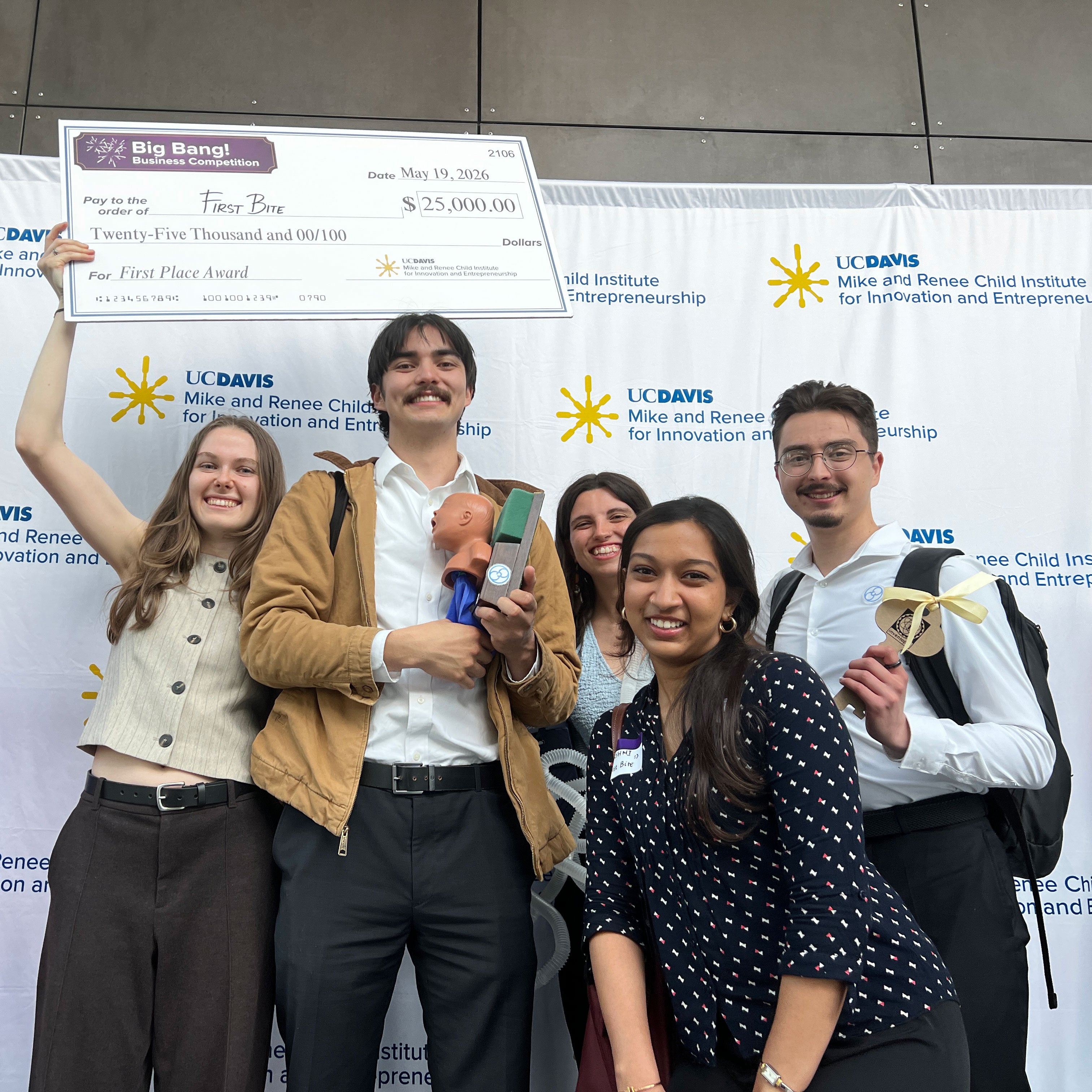
The students have already received significant attention for First Bite. They took third place in the Sacramento Kings Capitalize startup competition, earned the top prize at the 2026 Big Bang! Competition and were named the startup of the month by Comstock’s Magazine.
Although the entire First Bite team has graduated, they continue to work with Wang and their clinical partners. They’ve submitted their engineering drawings to a mold manufacturer, are working to secure a patent and aim to test their device at UC Davis Health by the end of the year.
“It is a huge village of people lending their time and expertise, just to be able to push the device forward,” Wang said.